
Table of Contents
ToggleTree Removal Cost Calculator: Get Your Estimate Now
Tree Removal Cost Calculator
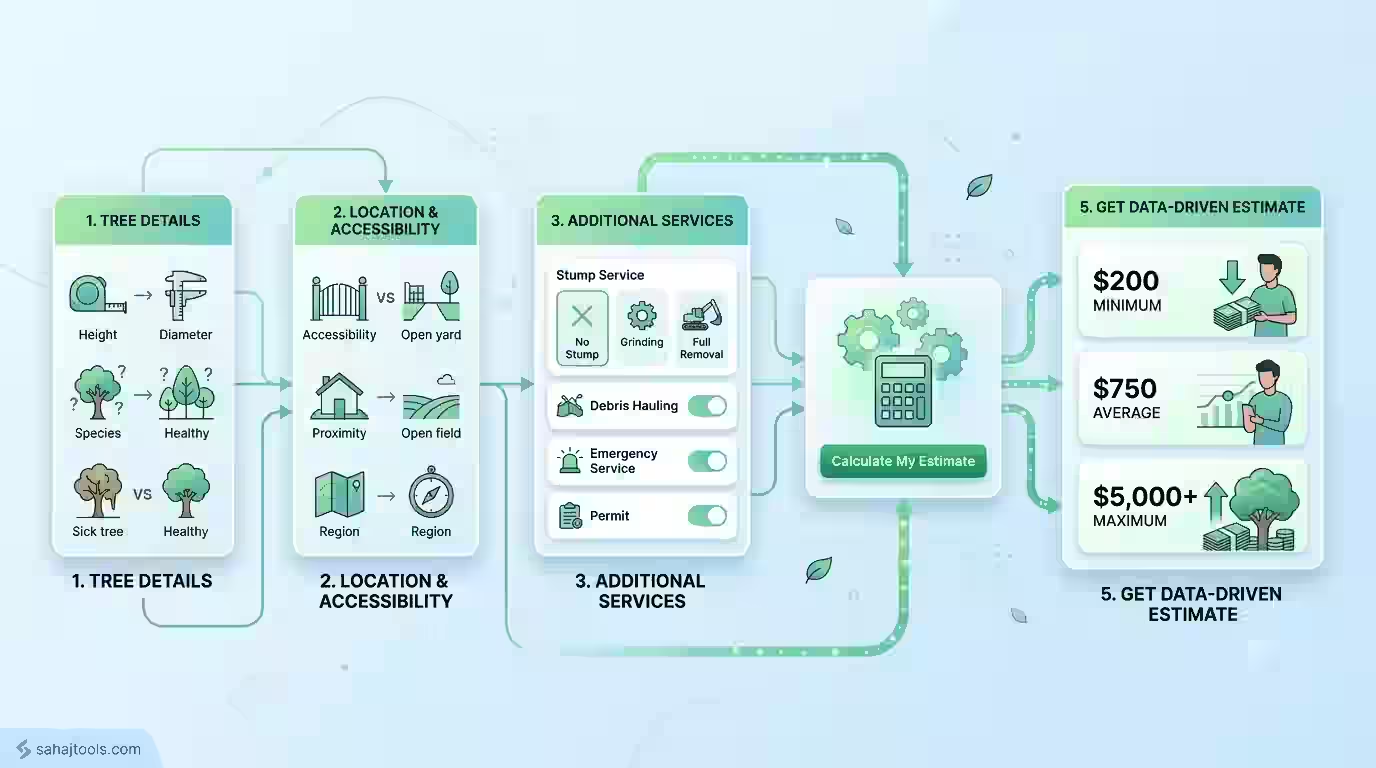
Get a precise, data-driven estimate based on 11 key variables including tree height, trunk diameter, species, condition, accessibility, and regional pricing—all in under 60 seconds.
$200Minimum
$750Average
$5,000+Maximum
🌿🍃🌿
Your Cost Estimate
Based on 2025 national dataEstimated Total Range
$—–$—
Most Likely Cost:$—
$200$1,000$2,500$5,000+
Job Complexity:
Cost Breakdown
Factors Applied to Your Estimate
⚠️ This is an estimate only. Actual quotes may vary based on site inspection, local market rates, and unforeseen conditions. Always get 3+ quotes from licensed arborists before proceeding.
Removing a tree typically costs between $200 and $2,500, with most homeowners paying around $750 for a mid-sized tree in a typical residential yard. The exact price depends on tree height, trunk diameter, species, condition, how close the tree is to your home, and how easily a crew can access it. Our Tree Removal Cost Calculator uses these factors together to give you a realistic, itemized estimate before you call a professional.
How the Tree Removal Cost Calculator Works
This tree removal cost estimator asks for the details that actually drive pricing on a real job — not just a flat “per tree” guess. You’ll enter your tree’s height in feet, its trunk diameter (measured at 4.5 feet from the ground, known as DBH or diameter at breast height), the species or general tree type, and its current condition (healthy, storm-damaged, or dead).
From there, the calculator factors in site accessibility (can a truck and chipper get close, or does the crew need to carry everything by hand?), proximity to structures like your house, garage, or power lines, your general region (labor and disposal costs vary significantly by area), and the number of trees you’re removing, since multi-tree jobs often qualify for a bulk discount.
You can also add optional services — stump grinding or full stump removal, debris hauling, emergency same-day service, or permit filing — so your final number reflects the complete job, not just the cutting and dropping.
The output is an estimate, not a binding quote. Actual pricing from a licensed arborist or tree service can vary based on a site visit, insurance requirements, and local market conditions.
How Tree Removal Cost Is Calculated
Tree services generally build a quote around a base rate tied to tree size, then layer on multipliers for difficulty. A simplified version of that logic looks like this:
Base Cost = (Height Factor × Trunk Diameter Factor) × Species Multiplier × Condition Multiplier × Accessibility Multiplier
Worked example: A healthy 45-foot oak with an 18-inch trunk diameter, growing in an open backyard with easy truck access, might price out like this:
- Base cost for a 40–60 ft tree: roughly $400–$800
- Hardwood species (oak) multiplier: +15–20% over softwood due to density and cutting time
- Healthy condition: no surcharge (dead or diseased trees often add 10–25% for extra care and cleanup)
- Easy accessibility: no surcharge
- Estimated total: $500–$900, before stump grinding or debris hauling
Change one variable — say, the same tree growing 10 feet from a house, requiring a crane and careful rigging — and that estimate can jump to $1,200–$2,000 or more, since tight accessibility is one of the biggest cost multipliers in tree removal.
Key Factors That Affect Tree Removal Pricing
Tree Height and Trunk Diameter
Height and DBH are the two biggest inputs into any tree removal quote. Taller trees require more rigging, more cuts, and more time aloft; wider trunks take longer to fell and section. As a general rule, trunk diameter matters slightly more than height for total labor time, since a wide trunk is harder and slower to cut through regardless of how tall the tree stands — though very tall trees (80+ ft) add their own crane or climbing-access costs.
Tree Species
Hardwoods (oak, maple, walnut) are denser and take longer to cut and haul than softwoods (pine, spruce, cedar), which typically pushes hardwood removal costs 10–20% higher for a comparably sized tree. Species also affects wood value — some tree services offer a small credit for valuable hardwood logs, which can slightly offset total cost.
Tree Condition
A dead, diseased, or storm-damaged tree isn’t necessarily cheaper to remove — it’s often more expensive. Dead wood can be unpredictable to cut, may require extra rigging to control fall direction, and sometimes needs faster scheduling if it’s a safety hazard. Expect a 10–25% premium over a healthy tree of the same size.
Site Accessibility and Proximity to Structures
If a crew can park a truck and chipper within reach of the tree, removal is faster and cheaper. If the tree is in a tight backyard, behind a fence, or near a pool, expect additional labor charges for manual carrying and rigging. Proximity to your house, a garage, a fence, or power lines adds further cost, since the crew must control the direction of each cut piece precisely — sometimes requiring a crane rather than a simple felling cut.
Region and Local Labor Rates
Tree removal cost estimator tools (including well-known ones like Homewyse and Angi’s cost guides) consistently show 20–40% regional price variation across the U.S., driven by labor rates, insurance costs, and local disposal fees. Urban and coastal metro areas tend to run higher than rural regions.
Number of Trees
Removing multiple trees in one visit spreads the crew’s setup and mobilization cost across more billable work, so many companies offer a bulk discount of 10–20% starting at the second tree.
Before finalizing your tree removal budget, use a Money Market Calculator to explore how saving that amount could grow your funds over time.
Stump Grinding, Stump Removal, and Debris Hauling Costs
Tree removal and stump handling are priced separately by most companies, since a felled tree and a ground stump require different equipment.
- Stump grinding cost typically runs $100–$400 per stump, depending on diameter — this leaves the root system in the ground but grinds the visible stump below grade so you can landscape over it.
- Full stump removal, which extracts the entire root ball, costs more — usually $150–$500 — because it requires heavier equipment and leaves a larger hole to backfill.
- Debris hauling cost for branches, logs, and chips generally adds $150–$500, depending on the tree’s size and whether the wood is chipped on-site or hauled whole
If you’re only comparing the difference between tree removal and stump grinding: tree removal is cutting down and removing the standing tree itself, while stump grinding addresses what’s left in the ground afterward — they’re almost always quoted as separate line items, even when done by the same crew on the same day.
Emergency and Same-Day Tree Removal Cost
Emergency tree removal — for a tree that’s fallen on a structure, is blocking a driveway, or poses an immediate hazard after a storm — typically adds a 50% surcharge to the base estimate, reflecting after-hours labor, rush scheduling, and higher insurance exposure for the crew. If a tree is actively threatening your home or a power line, contact your utility company and a licensed emergency tree service immediately rather than waiting for a standard quote.
Permits and Local Regulations
Some municipalities and homeowners’ associations require a permit before removing a tree, especially for large, protected, or heritage species. Permit filing typically adds $40–$200 to the total project cost and may require an arborist report documenting the tree’s health or hazard status before approval. Requirements vary widely by city and county — always check your local ordinance before scheduling removal, since unpermitted removal of a protected tree can carry fines separate from the removal cost itself.
Getting an Accurate Tree Removal Quote
This calculator gives you a realistic planning estimate, but the most accurate number comes from an in-person site visit. When comparing quotes from tree services, ask each company to itemize: base removal, stump handling, debris hauling, and any permit or insurance fees, so you’re comparing complete totals rather than a low headline number that excludes cleanup.
Frequently Asked Questions
The main factors are tree height, trunk diameter (DBH), species, condition, site accessibility, proximity to structures, your region, and the number of trees being removed. Optional add-ons like stump grinding, debris hauling, permits, and emergency service also change the final total.
Stump grinding typically costs $100–$400 per stump, depending on trunk diameter and root spread. It grinds the stump below grade so the area can be landscaped over, but leaves the root system in the ground.
Full stump removal, which extracts the entire root ball rather than just grinding the visible stump, generally costs $150–$500 per stump due to the heavier equipment and larger excavation involved.
Debris hauling for branches, logs, and wood chips usually adds $150–$500 to a tree removal job, depending on the tree's size and total volume of material.
Trunk diameter (DBH) generally has a slightly larger impact on labor time than height, since a wide trunk takes longer to cut through regardless of tree height. Very tall trees add their own costs through crane or advanced rigging needs.
Easy truck access can keep costs at the lower end of the range, while tight yards, fences, or nearby structures add labor time for manual carrying and precise rigging — sometimes requiring a crane, which can raise the total by several hundred dollars or more.
Permit requirements vary by city and county, and are most common for large, protected, or heritage tree species. Some jurisdictions require an arborist report before approving removal. Always check local ordinances before scheduling work.
Emergency or same-day tree removal typically adds a 50% surcharge over standard pricing to account for rush scheduling and after-hours labor. If a tree is an immediate safety hazard, contact a licensed emergency tree service right away.
This calculator provides a planning estimate only. Actual tree removal costs vary by local labor rates, insurance requirements, and site conditions that only an in-person quote can capture. For large, hazardous, or protected trees, consult a licensed, insured arborist before scheduling work.
Last Update: July 2026