
Table of Contents
ToggleChicken Coop Size Calculator: How Much Space Do Your Chickens Really Need?
🐔
Chicken Coop Size Calculator
Plan your perfect flock housing with science-backed space requirements
1
Your Flock
2
Housing Style
How will your chickens spend most of their daytime?
3
Advanced Options
✅
Your Coop Plan
📋 Calculation Breakdown
⚠️
Reset Calculator?
This will clear all inputs and results. Are you sure?
A chicken coop size calculator tells you how much indoor coop space and outdoor run space your flock needs based on the number and breed of your birds. As a baseline, standard-size chickens need about 4 square feet of coop space and 10 square feet of run space per bird, while bantams need less and large breeds need more. Enter your flock size and housing style below to get exact dimensions.
related agriculture & farming calculators
How to Use This Chicken Coop and Run Size Calculator
Getting an accurate chicken coop dimensions planner result takes less than a minute:
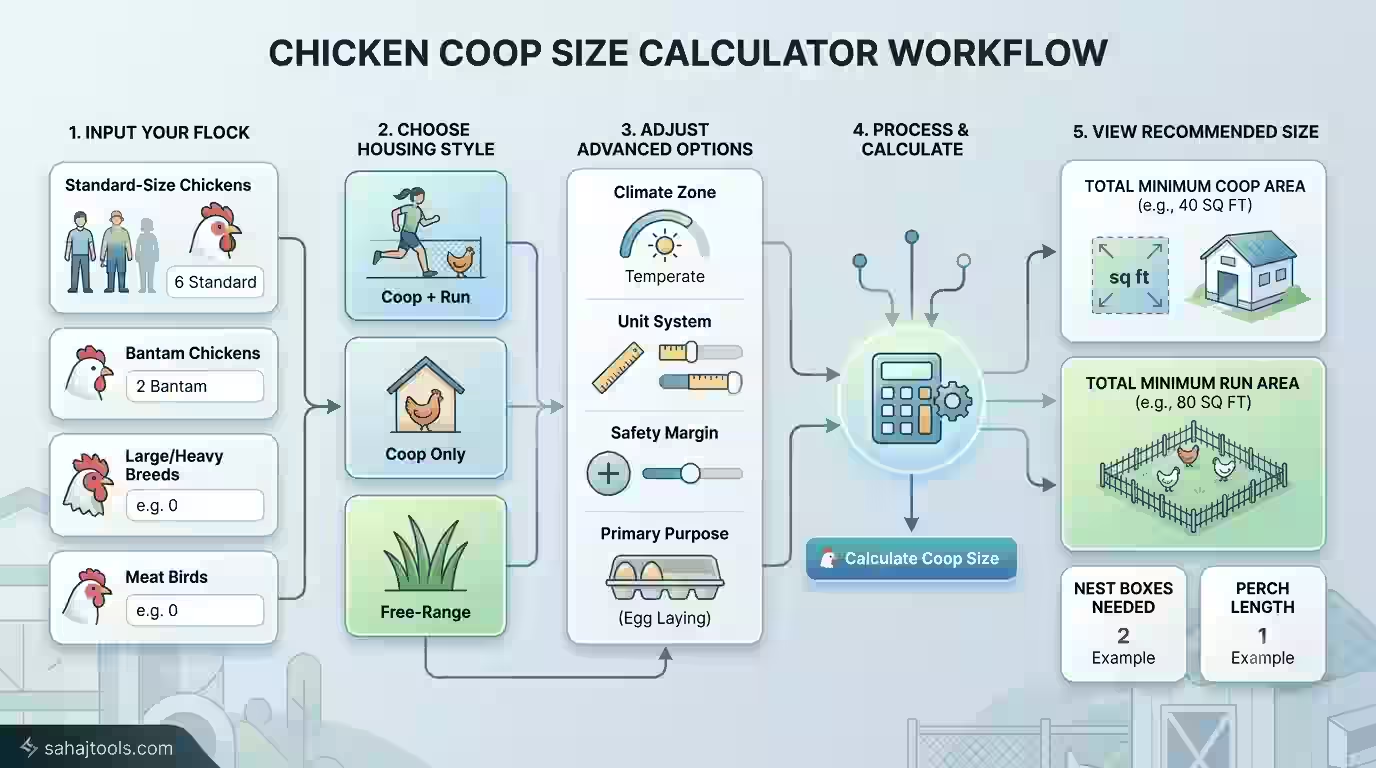
- Enter your flock counts by category — standard-size chickens, bantams, large or heavy breeds, and meat birds (broilers), since each has different space needs.
- Choose your housing style — Coop + Run, Coop Only, or Free-Range — because this changes how much of the total space needs to be indoor versus outdoor.
- Open Advanced Options if you want to adjust Climate Zone, Unit System, Safety Margin, and Primary Purpose.
- Select Calculate Coop Size to see your recommended footprint, broken down as length × width suggestions along with total square footage.
The calculator handles the math for mixed flocks automatically, so you don’t need to run separate figures for your bantams and your standard hens.
Chicken Coop Size Formula: How Space Requirements Are Calculated
The core chicken coop space requirements per hen formula used by most poultry keepers and extension programs is straightforward:
- Indoor coop space = number of standard chickens × 4 sq ft
- Outdoor run space = number of standard chickens × 10 sq ft
So a coop for 6 chickens needs roughly 24 sq ft of coop space and 60 sq ft of run space if they’ll have outdoor access. If your birds are confined to the coop most of the day (Coop Only style), the calculator increases the indoor allowance instead, since less time outside means more space is needed inside to prevent stress and pecking.
Bantam, Standard, and Large-Breed Coop Sizing
Breed size changes the numbers meaningfully:
- Bantam chicken coop size: roughly 2 sq ft coop space and 5 sq ft run space per bird — about half the standard requirement.
- Standard breeds: 4 sq ft coop, 10 sq ft run, as above.
- Large or giant breeds (Jersey Giant, Brahma): 5–8 sq ft coop space and 10–15 sq ft run space per bird, since these breeds are physically larger and less agile.
For mixed-breed or mixed-size flocks, calculate each group separately using its own ratio, then add the totals — this is exactly what the calculator does behind the scenes when you enter counts across multiple breed categories.
Nesting Box Requirements
A commonly used ratio is 1 nesting box per 3–4 hens. Hens will share boxes and often prefer just one or two favorites regardless of how many are available, so this ratio is about giving every hen reasonable access, not a strict one-to-one requirement.
Perch and Roosting Bar Length
Budget 8–10 inches (about 15 cm) of roosting bar per hen. Chickens roost shoulder-to-shoulder at night, and undersized perches lead to crowding and feather-pecking as birds compete for space.
Ventilation Requirements
Coops need at least 1 sq ft of ventilation opening per 10 sq ft of floor space. Ammonia buildup from droppings is a leading cause of respiratory illness in backyard flocks, so ventilation isn’t optional even in a well-sized coop.
Worked Examples
Example 1 — Small backyard flock:
6 standard hens, Coop + Run style.
- Coop space: 6 × 4 sq ft = 24 sq ft (a 4×6 ft coop works well)
- Run space: 6 × 10 sq ft = 60 sq ft (roughly 6×10 ft)
- Nesting boxes: 2 (at 1 per 3 hens)
- Perch length: 48–60 inches total
Example 2 — Larger mixed flock (chicken coop for 50 chickens):
50 standard hens, Coop Only style (limited outdoor access).
- Coop space: since these birds spend most of the day inside, the practical target increases to roughly 6–8 sq ft per bird rather than the 4 sq ft outdoor-access minimum — around 300–400 sq ft total.
- Run space (if any supplemental outdoor time is offered): 50 × 10 sq ft = 500 sq ft
- Nesting boxes: 13–17 boxes
- Perch length: roughly 400–500 inches (33–42 linear feet) of roosting bar, arranged across multiple tiers to fit the space
This example shows why housing style matters as much as flock size: the same 50 birds need very different footprints depending on how much time they’ll actually spend outdoors.
Chicken Coop Size Chart by Flock Size
Flock Size (Standard Breed) | Coop Space (Coop + Run) | Run Space | Nesting Boxes | Perch Length |
2 hens | 8 sq ft | 20 sq ft | 1 | 16–20 in |
4 hens | 16 sq ft | 40 sq ft | 1–2 | 32–40 in |
6 hens | 24 sq ft | 60 sq ft | 2 | 48–60 in |
10 hens | 40 sq ft | 100 sq ft | 3 | 80–100 in |
12 hens | 48 sq ft | 120 sq ft | 3–4 | 96–120 in |
Minimum coop size for 4 hens, for example, is about 16 sq ft of indoor space — but more room is always better than the bare minimum, especially in winter when birds spend more time indoors.
What Your Calculator Results Mean
Your result is a guideline, not a guarantee — actual welfare outcomes depend on ventilation quality, predator protection, litter management, and how much time birds genuinely spend in each space. A welfare-friendly stocking density gives your flock room to express natural behaviors — dust bathing, scratching, spacing out during molts — rather than just avoiding outright crowding. If your calculated footprint feels tight for your climate or breed temperament, sizing up is rarely a mistake.
There’s also a well-documented link between space and egg production: chronically crowded hens lay less consistently and are more prone to stress-related feather loss, so adequate space isn’t just a comfort question — it affects your flock’s output too.
Factors That Affect Your Coop Size Results
- Free-range vs. confined management — free-range flocks need less run space (they roam beyond it) but still need full coop space for nighttime housing and weather refuge.
- Mobile coops (chicken tractors) — since these are moved regularly to fresh ground, they can run slightly smaller per-bird footprints than a fixed run, provided they’re moved often enough to prevent litter buildup.
- Deep litter method — coops using deep litter bedding benefit from a bit of extra floor space to let litter compost properly without overcrowding birds.
- Rescue or ex-caged hens — hens coming from cage environments often need more space initially, not less, as they adjust to normal flock behavior and pecking order.
- Future flock growth — if you plan to add birds, size your coop for your target flock now rather than your starting flock, since expanding a built coop is far harder than building slightly larger from the start.
Seasonal Considerations: Winter vs. Summer Coop and Run Use
In winter, chickens spend far more time inside, so indoor space matters more than usual — this is a good time to lean toward the higher end of the coop-space range. In summer, adequate run space and shade matter more, since birds will avoid a hot, poorly ventilated coop during the day regardless of how large it is.
Regional Notes: US, UK, and EU Chicken Space Guidelines
In the United States, there’s no single federal chicken coop size law for backyard flocks — the 4 sq ft (coop) / 10 sq ft (run) per bird figures used here are widely-cited industry and extension guidelines rather than mandatory minimums, though many municipalities set their own zoning rules on coop size, setbacks, and flock limits, so check local ordinances before building.
In the UK and EU, animal welfare guidance for backyard hens commonly cites figures around 0.19 m² of indoor space per hen and about 2.0 m² of run space per hen — broadly similar in spirit to the US figures once converted, though exact recommendations vary by organization. If you’re building to UK or EU guidance, convert using roughly 1 sq ft ≈ 0.093 m² and check current guidance from a recognized poultry welfare body for your region.
Common Mistakes to Avoid
- Sizing for today’s flock only. Chickens are famously easy to “accidentally” acquire more of — build in some margin.
- Ignoring ventilation in favor of insulation. A tightly sealed coop traps ammonia and moisture even if it’s warm.
- Assuming free-range removes the need for adequate coop space. Birds still need full housing at night and during bad weather.
- Overcrowding nesting boxes into a corner instead of distributing them can cause competition and egg-eating behavior.
- Skipping local zoning checks before building a coop sized for a larger flock than your area permits.
Expert tip: Most experienced backyard keepers will tell you that the calculator’s minimums are a starting point, not a target — a few extra square feet per bird, especially in the run, consistently pays off in calmer, healthier flocks and easier cleaning.
other agriculture calculators
- Crop Yield Calculator – Estimate harvest output for chicken feed crops like corn or soybeans.
- Fertilizer Application Rate Calculator – Optimize soil nutrients for pasture health.
- Irrigation Water Need Calculator – Ensure your flock’s water supply is sufficient, especially in free-range systems.
- Nitrogen Application Calculator – Balance nitrogen levels in poultry manure for garden use.
Frequently Asked Questions
Standard-size hens need about 4 sq ft of coop space and 10 sq ft of run space each. Bantams need roughly half that; large breeds need more.
Around 16 sq ft of coop space and 40 sq ft of run space, based on the standard 4 sq ft / 10 sq ft per-bird ratio.
About 10 sq ft per standard hen. Birds without free-range access rely entirely on the run for outdoor activity, so this figure shouldn't be reduced.
A 4×8 coop (32 sq ft) comfortably houses about 8 standard hens indoors. A 10×10 coop (100 sq ft) can house around 25 standard hens, assuming adequate run space is also provided.
About 2 boxes for 6 hens, and 3 boxes for 10 hens, using the 1-box-per-3-4-hens ratio.
Roughly 8–10 inches (about 15 cm) per standard hen.
Bantams need about 2 sq ft coop space and 5 sq ft run space per bird, compared to 4 sq ft and 10 sq ft for standard breeds.
Large breeds like Jersey Giants or Brahmas need 5–8 sq ft of coop space and 10–15 sq ft of run space per bird due to their larger body size.
Commonly cited figures are around 0.19 m² indoor space and 2.0 m² run space per hen, though exact numbers vary by welfare organization.
At least 1 sq ft of ventilation opening per 10 sq ft of floor space.
Size your build for your target flock count, not just your current one, since expanding an existing coop structure is usually more difficult than building larger initially.
It depends more on your local zoning limits than the birds themselves — check permitted flock size and setback rules before sizing your coop.
4 sq ft indoors for standard breeds is the widely-used baseline, with bantams needing less and large breeds needing more.
A well-sized chicken coop is the foundation of a healthy, happy, and productive flock. Whether you’re a first-time chicken owner or a seasoned homesteader, our chicken coop size calculator removes the guesswork, ensuring your birds have enough space to thrive.
Last Update: July 2026