
Table of Contents
ToggleVehicle Wrap Pricing Calculator: Estimate Your Full Wrap Cost by Vehicle, Material, and Region
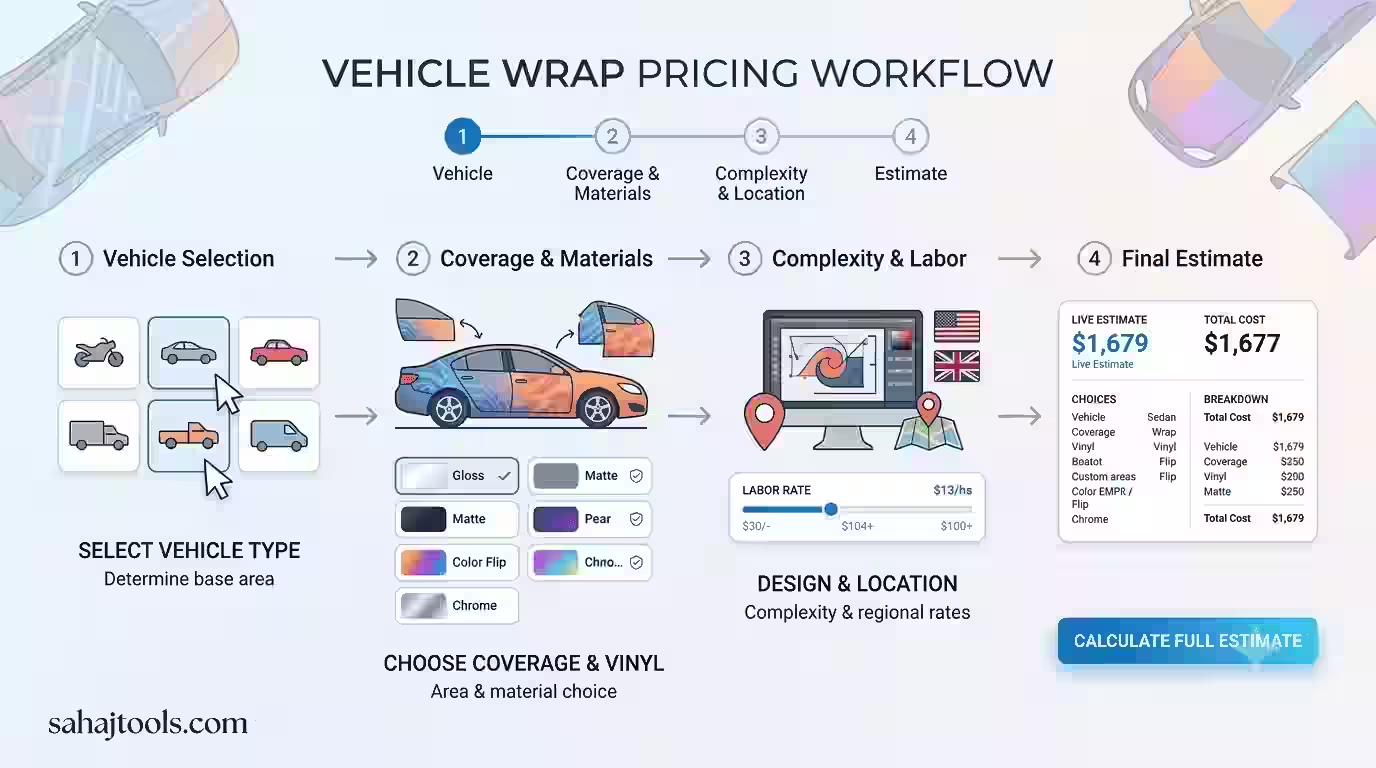
A vehicle wrap pricing calculator estimates the total cost of vinyl-wrapping a vehicle by combining four variables: vehicle surface area, wrap coverage percentage, vinyl material grade, and regional labor rate. It’s built for anyone comparing a car wrap cost calculator estimate against shop quotes — vehicle owners, small business fleet managers, and wrap shops drafting quick quotes — before committing to a full wrap, partial wrap, or color-change project.
Industry-Accurate Estimates
Vehicle Wrap Pricing Calculator
Real-world pricing backed by 2025 industry data — material costs, labor rates, complexity, region, and add-ons.
Live Estimate
$—
Adjust options below
Vehicle Type
Select your vehicle class to set base surface area
🏍️Motorcycle~55 sq ft
🚗Compact Car~175 sq ft
🚘Sedan~225 sq ft
🏎️Coupe / Sport~200 sq ft
🚙Small SUV~260 sq ft
🛻Large SUV~310 sq ft
🚚Pickup Truck~340 sq ft
🚌Minivan~380 sq ft
🚐Cargo Van~450 sq ft
🚍Transit Van~520 sq ft
Wrap Coverage
How much of the vehicle will be wrapped?
🔲Full Wrap100% coverage
◼️Half Wrap~60% coverage
▪️Partial Wrap~35% coverage
🏷️Decals Only~12% coverage
⚙️Custom %You choose
50%
5%25%50%75%100%
Coverage area100%
Vinyl Material
Choose film type — affects cost, durability & appearance
Design Complexity
Complexity affects labor time and material waste
🟩SimpleFlat color
🟨Moderate1–2 colors
🟧ComplexCustom graphics
🟥ExtremeFull custom
Vehicle Surface Condition Affects prep labor
⭐ExcellentNo defects
✅GoodMinor marks
⚠️FairSome damage
🔧PoorNeeds repair
Region & Labor Rate
Geographic labor cost variations (2025 data)
🇺🇸US Northeast
🇺🇸US Midwest
🇺🇸US South
🇺🇸US West
🇬🇧UK
🇪🇺EU West
🇦🇺Australia
🇨🇦Canada
🌏Asia-Pacific
🌎Latin America
$75/hr
$30/hr$75/hr$120/hr$180/hr
Industry standard: $60–$95/hr for certified installers. Premium shops charge $100–$150/hr.
Optional Add-Ons
Select any additional services needed
🎨 Custom Graphic Design
Professional design service (2–5 hrs)
+$350
🔧 Old Wrap Removal
Remove and dispose of existing wrap
+$300
🛡️ Gloss/Matte Laminate
UV overlaminate extends wrap life 2–3 yrs
+$200
✨ Surface Preparation
Deep clean, clay bar & panel decon
+$150
📋 Extended Warranty
2-year installation warranty coverage
+$180
⚡ Rush / Same-Week
Priority scheduling — 30% surcharge
+30%
TOTAL ESTIMATED COST
$0
Estimated range: —
— sq ft— labor hours——
📐
Wrap Area
—
incl. 15% buffer
⏱️
Labor Time
—
—
🧾
Material Cost
—
per sq ft
💹
All-In Rate
—
per sq ft
Detailed Cost Breakdown
Total Estimate
—
📈
Business Wrap ROI Indicators
Daily Impressions
—
Monthly Views
—
Cost/Impression
—
ROI Payback
—
* ROI estimates based on standard mobile advertising impression data and conservative CPM values.
💡 Expert Recommendation
—
ℹ️ All estimates are for planning purposes only. Actual costs vary by installer, location, vehicle condition, and market factors. Always request a written quote from a certified wrap installer before committing to a project.
⚠️ Reset Calculator?
This will clear all your current selections and the saved estimate from this session. This action cannot be undone.
related hobby & diy calculator
How to Use This Calculator
- Select your vehicle type — motorcycle through transit van, each with a preset surface-area estimate (roughly 55 sq ft for a motorcycle up to 520 sq ft for a transit van).
- Choose wrap coverage — full wrap (100%), half wrap (~60%), partial wrap (~35%), decals only (~12%), or a custom percentage.
- Pick a vinyl material — from economy gloss vinyl up to chrome or paint protection film, each with its own per-square-foot rate and expected lifespan.
- Set design complexity and vehicle condition — flat color versus full custom graphics, and whether the paint needs extra prep.
- Select your region and labor rate — hourly installer rates vary meaningfully by geography.
- Add any optional services — custom graphic design, old wrap removal, laminate, extended warranty, or rush scheduling.
The calculator returns a live estimate range that updates as you adjust each input, then a full breakdown once you generate the final estimate.
How It Works: The Wrap Cost Formula
Vehicle wrap pricing follows a straightforward structure once you break it into parts:
Total Cost = (Vehicle Surface Area × Coverage % × Material Cost per Sq Ft) + (Labor Hours × Hourly Labor Rate) + Add-Ons
- Surface area comes from vehicle class — a sedan averages around 225 sq ft of wrappable surface, while a large SUV or pickup runs closer to 310–340 sq ft.
- Coverage percentage determines how much of that area actually gets material: a half wrap only needs vinyl (and labor) for roughly 60% of the surface, which is why partial wraps and decal packages cost meaningfully less than a full wrap.
- Material cost per square foot ranges from about $1.50 for economy gloss vinyl to $9 or more for chrome finishes — this is the single biggest lever in vehicle wrap material cost.
- Labor is billed hourly, and design complexity plus vehicle surface condition (excellent versus needing repair) both add or subtract prep and installation time. Design complexity and vehicle condition are the two factors that most often cause an installer’s real quote to diverge from a rough square-footage estimate.
- Add-ons — custom graphic design, old wrap removal, surface prep, extended warranty, or rush/same-week scheduling — stack on top as flat fees or percentage surcharges.
Worked Example
Say you’re pricing a full wrap on a sedan (≈225 sq ft) using Gloss Vinyl from 3M or Avery Dennison ($2.50/sq ft), with a moderate-complexity design (1–2 colors) on a vehicle in good condition, installed in the US Midwest at $75/hr.
- Material: 225 sq ft × 100% coverage × $2.50/sq ft = $562.50
- Labor: moderate complexity on a sedan in good condition typically runs 12–15 hours of installation. At $75/hr, 15 hours = $1,125
- Add-ons: none selected in this example
- Total estimate: roughly $1,680, landing within an expected range of about $1,480–$1,880 — consistent with typical wrap cost breakdown figures for a mid-tier vinyl wrap.
Add custom graphic design ($350) and a two-year gloss laminate ($200), and the same sedan climbs to roughly $2,230.
Understanding Your Results
The number you get is a material-plus-labor estimate, not a fixed quote — real installer pricing also depends on panel-by-panel measurements taken during a physical inspection, since curved bumpers, mirrors, and door jambs require more precise cutting and waste more material than flat panels. Industry-standard installer rates run about $60–$95/hr for certified shops, with premium shops charging $100–$150/hr, so if your region’s rate sits outside that band, treat the low or high end of your estimate range as the more realistic figure.
A useful sanity check: cost for vinyl wrap work typically lands somewhere between routine detailing and a partial repaint — full wraps are usually cheaper than a quality paint job, and reversible, which is a common reason fleet owners choose a color change wrap over respraying.
Vinyl Material Reference Table
Material Type | Cost per Sq Ft | Typical Lifespan | Tier |
Gloss Vinyl (Economy) | $1.50 | 2–3 yrs | Budget |
Gloss Vinyl (3M/Avery) | $2.50 | 5–7 yrs | Standard |
Matte Vinyl | $3.00 | 5–7 yrs | Standard |
Satin/Silk | $3.50 | 5–7 yrs | Premium |
Metallic | $4.50 | 5–7 yrs | Premium |
Carbon Fiber | $5.50 | 3–5 yrs | Premium |
Brushed Metal | $5.00 | 3–5 yrs | Premium |
Color-Shift/Flip | $7.50 | 3–5 yrs | Luxury |
Chrome | $9.00 | 2–3 yrs | Luxury |
Paint Protection Film | $8.00 | 7–10 yrs | Luxury |
3M, Avery Dennison, and KPMF are the three film brands most wrap shops standardize on for cast vinyl — the higher-durability category used for full wraps and color changes. Cast vinyl is thinner, conforms better around door jambs and curves, and resists shrinkage, which is why it costs more than calendered vinyl, a thicker, less flexible film generally reserved for flat-panel decals or short-term partial wraps.
Wrap Cost by Vehicle Type
Vehicle | Approx. Surface Area | Full Wrap (Standard Vinyl) Est. |
Motorcycle | ~55 sq ft | $250–$450 |
Compact Car | ~175 sq ft | $1,200–$1,600 |
Sedan | ~225 sq ft | $1,500–$1,900 |
Coupe/Sport | ~200 sq ft | $1,400–$1,800 |
Small SUV | ~260 sq ft | $1,700–$2,200 |
Large SUV | ~310 sq ft | $2,000–$2,600 |
Pickup Truck | ~340 sq ft | $2,200–$2,800 |
Minivan | ~380 sq ft | $2,400–$3,000 |
Cargo Van | ~450 sq ft | $2,800–$3,600 |
Transit Van | ~520 sq ft | $3,200–$4,200 |
Commercial fleet wraps on cargo or transit vans sit at the top of this range partly because of size and partly because fleet jobs almost always include custom graphic design rather than a plain color change.
Common Mistakes & Pro Tips
- Underestimating disassembly labor. Wrapping around mirrors, handles, and trim well means partially removing them first — installers who skip this step get a faster job and a worse-looking one.
- Assuming full wrap and half wrap scale linearly. A half wrap isn’t simply half the cost, since setup, plotting, and trim time don’t shrink proportionally with coverage — expect a half wrap to run closer to 65–70% of full-wrap pricing, not 50%.
- Choosing calendered vinyl for a full wrap. It’s cheaper per square foot but doesn’t conform to compound curves, leading to lifting edges and a shorter usable life — fine for flat decals, risky for a full body.
- Skipping surface prep on an older vehicle. Wrap adhesive won’t bond properly over old wax, road grime, or minor oxidation — a $150 detail/clay-bar step upfront prevents peeling within months.
- Forgetting removal costs when re-wrapping. Pulling an existing wrap before a new install typically adds $200–$400 depending on adhesive age and condition.
- Not budgeting for rush timelines. Same-week scheduling commonly adds a 25–30% surcharge over standard 1–2 week booking.
other Related Calculators You Might Need
- 3D Print Material Cost Calculator: Planning to 3D print custom parts for your vehicle? Use this tool to estimate filament costs based on material type (PLA, ABS, PETG), part size, and infill percentage.
- Resin Print Cost Calculator: For high-detail resin prints (e.g., custom emblems, interior trim), this calculator helps you compare resin costs and print time for SLA/DLP printers.
Frequently Asked Questions
A full car wrap typically runs $1,200–$2,600 depending on vehicle size, vinyl grade, and labor rate, with a mid-size sedan in standard cast vinyl averaging around $1,500–$1,900.
Pickup trucks generally run $2,200–$2,800, SUVs fall between $1,700–$2,600 depending on size, and vans range from about $2,400–$4,200, since larger surface area and more complex panel shapes both add material and labor time.
The main drivers are vehicle surface area, coverage percentage (full versus partial), vinyl material grade, design complexity, regional labor rate, and any add-ons like custom design, old wrap removal, or rush scheduling.
Cast vinyl is thinner and more conformable, making it the standard choice for full wraps and curved panels, while calendered vinyl is thicker, less flexible, and better suited to flat-panel decals or short-term applications.
Most standard cast vinyl wraps last 5–7 years with proper care, economy vinyl typically lasts 2–3 years, and specialty finishes like chrome or color-shift films generally last 2–5 years due to their thinner, more delicate topcoats.
In most cases yes — a quality full wrap usually costs less than a professional paint job of comparable finish quality, and unlike paint, a wrap is fully reversible and protects the factory paint underneath.
Price scales with surface area, so a transit van (~520 sq ft) costs roughly 8–9 times more in materials than a motorcycle (~55 sq ft), though labor time doesn't scale as steeply since larger flat panels are often faster per square foot to install than a motorcycle's tight curves.
Last Update: July 2026