
Table of Contents
ToggleNHS Maternity Pay Calculator – Estimate Your Maternity Pay Accurately
The NHS Maternity Pay Calculator helps NHS staff estimate their Occupational Maternity Pay (OMP) and Statutory Maternity Pay (SMP) across a full maternity leave period, using current 2025/26 rates and NHS Agenda for Change terms. It’s built for midwives, nurses, allied health professionals, admin staff, and any NHS employee — permanent, bank, or agency — who wants a clear picture of their income before they go on leave, so they can plan their finances with confidence rather than guesswork.
2025/26 Rates Applied
NHS Maternity Pay Calculator
Accurate OMP & SMP estimates for Agenda for Change staff — updated for April 2025 rates
Step 1
Your Employment Details
£
Total Pay (Paid Weeks)—
Weekly Take‑Home (Avg)—
Leave Period—
Step 2
Pay Phase Breakdown
Detail
Week‑by‑Week Summary
| Week | Phase | Gross Weekly Pay | Running Total |
|---|
This calculator provides estimates based on NHS Agenda for Change terms and 2025/26 SMP rates. Results are for guidance only — always confirm with your NHS Trust's payroll department.
Reset Calculator?
This will clear all inputs, results and saved data. This cannot be undone.
Enter your annual salary, length of NHS continuous service, expected due date, and intended leave start date, and the calculator returns a full week-by-week pay breakdown, so you know exactly when full pay ends, when half pay starts, and when payments drop to the statutory minimum.
How NHS Maternity Pay Works
NHS maternity pay is built from two layers that can run one after another: Occupational Maternity Pay (OMP), which is the NHS’s own enhanced maternity benefit under Agenda for Change, and Statutory Maternity Pay (SMP), the legal minimum set by the UK government that every eligible employee in the country receives regardless of employer.
Occupational Maternity Pay is available to NHS staff who have at least 12 months of continuous service with the NHS by the start of the 11th week before their expected week of childbirth. Employees who qualify typically receive:
- 8 weeks at full pay (less any SMP or Maternity Allowance received)
- 18 weeks at half pay (plus SMP, up to full pay)
- 13 weeks at SMP rate (the statutory minimum)
- 13 weeks unpaid (if the full 52 weeks of leave is taken)
Statutory Maternity Pay is the baseline that applies if you don’t qualify for OMP, or continues once your occupational entitlement ends. SMP is paid for up to 39 weeks: the first 6 weeks at 90% of average weekly earnings, and the remaining 33 weeks at the lower of the standard SMP rate or 90% of average weekly earnings. Average weekly earnings are calculated from your pay before deductions (tax and National Insurance), based on a set reference period tied to your qualifying week — the 15th week before your expected week of childbirth.
The calculator applies these rules against the dates and salary you enter to build a full 52-week maternity leave calculator style breakdown, so you can see exactly which pay tier applies in any given week.
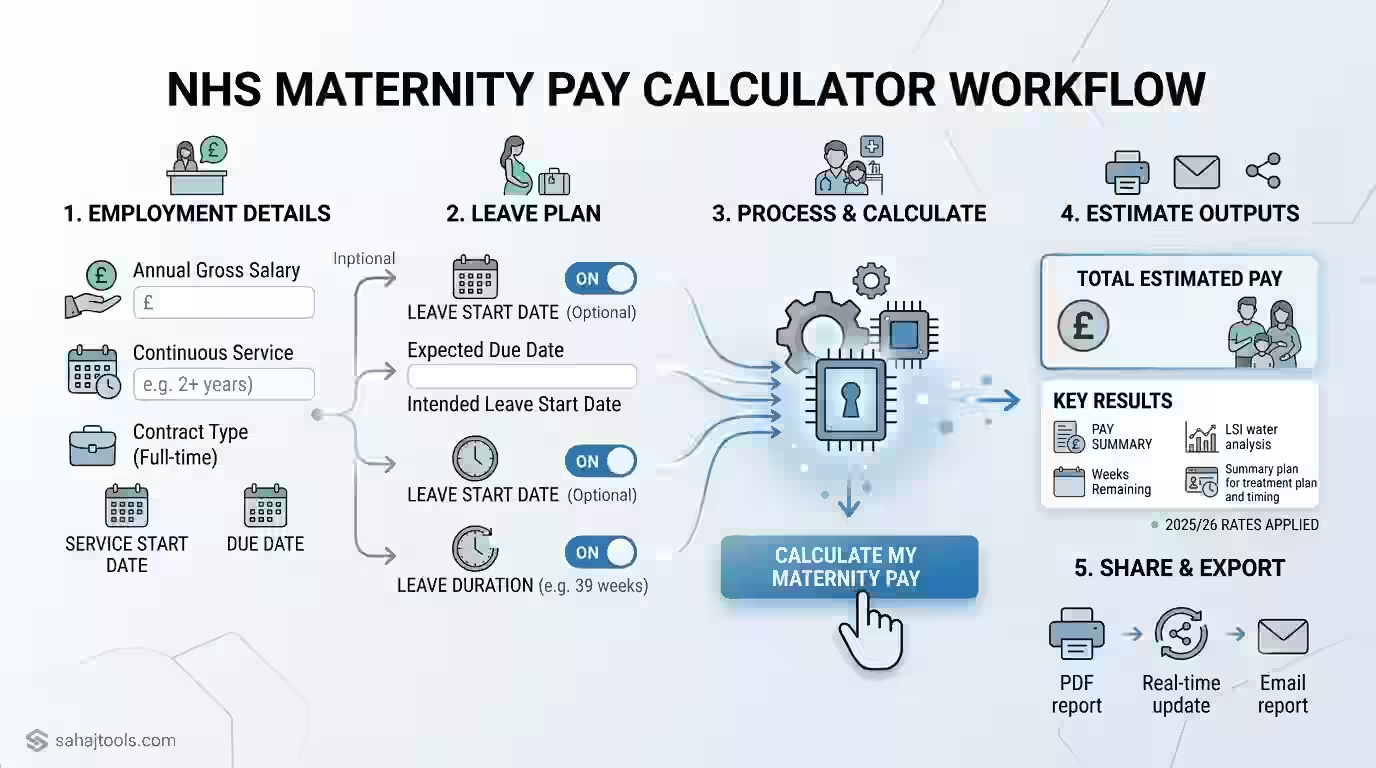
Step-by-Step: How to Use the Calculator
- Enter your annual gross salary. This is your full-time equivalent salary before tax, used to calculate your weekly earnings baseline.
- Select your NHS continuous service length. This determines whether you meet the 12-month threshold for Occupational Maternity Pay.
- Enter your expected due date. The calculator uses this to work out your expected week of childbirth and your qualifying week automatically.
- Enter your intended leave start date. This can be no earlier than 11 weeks before your due date, and the calculator will flag your earliest permitted start date and latest return date.
- Choose your contract type (full-time or part-time) so earnings are pro-rated correctly.
- Confirm whether you plan to return to the NHS after leave — this affects whether OMP is repayable if you don’t return for the required minimum period.
- Select your planned leave duration — 26 weeks (Ordinary Maternity Leave only), 39 weeks (the maximum paid period), or the full 52 weeks.
- Select “Calculate My Maternity Pay” to generate your personalised pay breakdown by week and pay tier.
Worked Example: A Full Maternity Pay Breakdown
Consider a full-time NHS nurse earning £34,000 a year, with 3 years of continuous NHS service, due to give birth in November and planning to take the full 39 weeks of paid leave.
- Weeks 1–8 (Full Pay): She receives her normal full weekly pay, minus whatever SMP she’s also entitled to during this period — so her take-home pay stays the same as usual.
- Weeks 9–26 (Half Pay): She receives half her normal weekly pay, plus SMP, up to a combined maximum of her full normal pay.
- Weeks 27–39 (SMP only): She receives the standard SMP rate, which by this stage is no longer topped up by her employer.
- Weeks 40–52 (if taken): Unpaid leave, unless she has annual leave or other entitlements to draw on.
This is a simplified illustration — your own maternity pay breakdown will depend on your exact salary, service length, and the specific weeks your Trust applies each tier from.
What the Results Mean
The calculator’s output tells you three key things: when your income changes, how much you’ll be paid in each phase, and your total estimated income across the leave period. A drop from full pay to half pay, and again from half pay to SMP, is the normal shape of NHS maternity pay — it isn’t an error or a sign something’s gone wrong with your claim.
If your result shows you don’t qualify for Occupational Maternity Pay (for example, because you haven’t yet reached 12 months of continuous service, or you’re on a bank or agency contract without OMP eligibility), you may still be entitled to Statutory Maternity Pay, or to Maternity Allowance through the Department for Work and Pensions if you don’t meet SMP’s own earnings and employment tests. Your maternity leave entitlement to time off (up to 52 weeks) is separate from your entitlement to pay, and applies regardless of your service length.
Accuracy & Regulatory Notes
This calculator is based on the current NHS Agenda for Change maternity pay framework and 2025/26 Statutory Maternity Pay rates. NHS pay scales, SMP rates, and OMP qualifying criteria are reviewed and updated periodically — most SMP rate changes take effect each April. Because your specific Trust may apply local variations, and because rates are subject to change, always verify your final figures against your NHS Trust’s payroll department, NHS Employers guidance, or GOV.UK‘s official Statutory Maternity Pay pages before relying on the numbers for financial planning.
Who Should Use This Calculator
- NHS employees planning ahead for pregnancy or adoption leave, who want to understand their income before they start budgeting for time off.
- Staff unsure whether they qualify for Occupational Maternity Pay, particularly those approaching the 12-month or 26-week continuous service thresholds.
- Bank and agency staff wanting clarity on how their contract type affects eligibility for enhanced NHS maternity pay versus the statutory minimum.
- Payroll and HR teams needing a quick reference to sense-check an individual’s estimated maternity pay breakdown.
Factors That Can Affect Your Result
- Length of continuous NHS service — falling just short of 12 months by the qualifying week changes your entire pay tier structure.
- Contract type and hours — part-time and variable-hours staff have earnings averaged differently.
- Timing of your leave start date relative to your due date and qualifying week.
- Whether you hold a maternity exemption certificate or other benefits that interact with statutory entitlements.
- Local Trust policy variations that may sit on top of the national Agenda for Change framework.
- Return-to-work agreements, since OMP is often repayable if you don’t return for a minimum period afterward.
Frequently Asked Questions
You're generally entitled to NHS Occupational Maternity Pay if you have at least 12 months of continuous NHS service by the start of your qualifying week and intend to return to NHS employment afterward. Bank and agency staff eligibility can vary, so it's worth checking directly with your employing Trust.
You qualify for SMP if you've been continuously employed by the same employer for at least 26 weeks by your qualifying week and meet the minimum average weekly earnings threshold. This applies whether or not you also qualify for the NHS's enhanced occupational pay.
Your maternity leave can start any day from 11 weeks before your expected week of childbirth, up to the birth itself, and you choose the exact date within that window (unless the baby arrives early or you're off sick with a pregnancy-related illness in the final 4 weeks).
The qualifying week is the 15th week before your expected week of childbirth. Your continuous service and average earnings are both assessed against this specific week, so it's the key reference point for eligibility.
NHS maternity leave entitlement runs up to 52 weeks in total — 26 weeks of Ordinary Maternity Leave followed by 26 weeks of Additional Maternity Leave — regardless of length of service, though pay only continues for part of that period.
It depends on your service length and salary: staff with 12+ months' service typically move through 8 weeks full pay, 18 weeks half pay plus SMP, then 13 weeks of SMP alone. Those who don't qualify for occupational pay generally receive SMP for up to 39 weeks instead.
Your key dates — qualifying week, earliest leave start date, and latest date leave must begin — are all calculated backward and forward from your expected due date, which is why entering an accurate due date is essential for a reliable maternity pay breakdown.
SMP and the earnings-linked portions of OMP are both based on your average weekly earnings before deductions like tax and National Insurance, calculated over a set reference period tied to your qualifying week; the payments themselves are still subject to normal tax and NI once paid.
Disclaimer: This tool gives an estimate only. Your actual maternity pay depends on your specific NHS Trust, your exact continuous service record, and any local contractual variations. Always confirm final figures with your Trust’s payroll or HR department before making financial decisions.
Last Update: July 2026