
Table of Contents
ToggleBra Size Calculator — Find Your Perfect Fit in Under 2 Minutes
Getting your bra size right starts with two numbers: your band and your bust. This bra size calculator uses your underbust and full bust measurements to instantly determine your band size, cup size, and complete bra size — no guesswork, no store fitting appointment required. Whether you’ve never been measured before or haven’t checked your size in years, the calculator below gives you an accurate starting point in seconds.
✦
Bra Size Calculator
Find your perfect fit with precision — in seconds
Units
Method
ℹModern method: Band = your actual under-bust measurement rounded to the nearest even number. Recommended by most fit experts & UK/EU brands.
1
Wrap tape snugly around your ribcage directly under your breasts. Keep it level — parallel to the floor. Exhale gently and note the number.
in
2
Measure around the fullest part of your bust. Keep the tape level and comfortably snug — it should not compress your breasts.
in
Your Results
Recommended Size (US)
34B
Band: 34 · Cup: B · Difference: 2"
International Sizes
US34B
UK34B
EU75B
AU12B
US & UK share band numbers but differ above DD. EU uses cm-based bands. AU uses numeric back sizing with UK cups.
Sister Sizes Same cup volume
These sizes share the same cup volume as yours. Perfect when your exact size is out of stock, or if a bra fits in the cup but not the band.
Tighter Band
32C
↓ band · ↑ cup
Your Size ✓
34B
Perfect fit
Looser Band
36A
↑ band · ↓ cup
Fit Guide
↺
Reset Calculator?All inputs and results will be cleared. This cannot be undone.
How the Bra Size Calculator Works
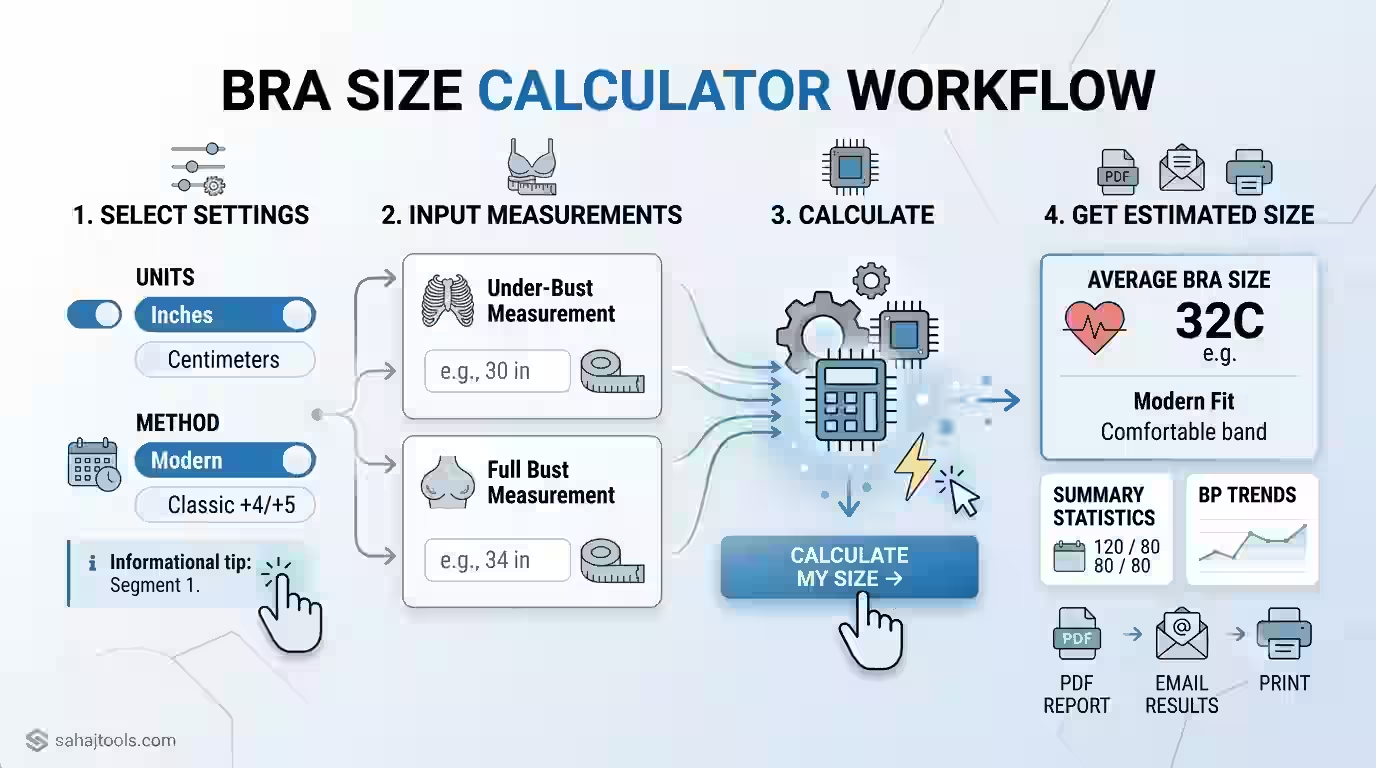
Enter two measurements — your underbust (band) measurement and your full bust measurement — and the calculator does the rest. It supports both inches and centimeters, and you can choose between two established sizing methods: the Modern method (recommended by most fit experts and UK/EU brands, where your band size is your actual underbust measurement rounded to the nearest even number) or the Classic +4/+5 method (the older US convention that adds 4 or 5 inches to your underbust reading). The difference between the cup size and band size in inches determines your cup letter, giving you a complete, ready-to-shop bra size.
Step-by-Step: How to Measure Your Bra Size at Home
Accurate results depend on accurate measurement. Follow these steps with a soft tape measure, ideally wearing a well-fitting, unpadded bra.
1. Underbust Measurement (Band Size)
Wrap the tape snugly around your ribcage directly under your breasts, keeping it level and parallel to the floor. It should sit snug — not tight, not loose — against your skin. Exhale gently and note the number where the tape meets. This snug underbust reading is the foundation of your band size calculator result.
2. Full Bust Measurement (Cup Size)
Wrap the tape around the fullest part of your bust, keeping it level across your back. The tape should be comfortably snug without compressing your breasts or pulling too loose. This is your standing bust measurement, and along with your underbust number, it determines your cup volume.
Measuring tips for accuracy:
- Measure over a thin, unpadded bra or bare skin for the truest reading
- Keep the tape parallel to the floor at both the front and back
- Take each measurement twice and use the average if the numbers differ slightly
- Re-measure any time your weight changes by more than a few pounds, after pregnancy, or roughly once a year
Understanding Band Size and Cup Size
Your band size is the number in your bra size (e.g., the “34” in 34B) and represents the measurement around your ribcage. It’s the primary source of support in a well-fitting bra — a properly sized band should stay level and snug on the loosest hook setting when new.
Your cup size is the letter (A, B, C, D, and beyond) that reflects the volume difference between your band and bust measurements. Cup size is always relative to band size: a D cup on a 30 band holds a different volume than a D cup on a 40 band, which is where many people get confused when shopping across brands.
Modern Method vs. Classic +4/+5 Method
This bra fit calculator supports both approaches because sizing conventions vary by brand and region:
- Modern method: Band size = underbust measurement rounded to the nearest even number. This is the standard used by most contemporary fit specialists and by UK and European lingerie brands, and it tends to produce a more accurate, supportive band size for most body types.
- Classic +4/+5 method: Band size = underbust measurement plus 4 inches (if underbust is even) or 5 inches (if odd). This older formula is still used by some traditional American department store brands but is increasingly considered outdated by professional bra fitters.
If your calculated size doesn’t feel right in either system, that’s common — sizing isn’t perfectly standardized across brands, and the right approach is to use your calculated size as a starting point, then adjust based on fit.
Sister Sizing: What to Do When a Size Is Out of Stock
Sister sizing is a simple rule for finding a same-cup-volume alternative when your exact size isn’t available. Moving one band size up means moving one cup size down (and vice versa) to preserve the same cup volume — for example, a 34C and a 36B hold roughly the same amount of volume, just distributed across a different band. This bra size conversion trick is especially useful when trying a new brand or when your usual size is sold out, since cup volume relationships hold fairly consistently even though exact fit still varies by brand.
Bra Size Chart: Band and Cup Reference
Underbust (in) | Band Size | Bust – Band Difference | Cup Size |
28–29 | 28 | 1″ | A |
30–31 | 30 | 2″ | B |
32–33 | 32 | 3″ | C |
34–35 | 34 | 4″ | D |
36–37 | 36 | 5″ | DD/E |
38–39 | 38 | 6″ | F |
This bra size chart reflects the Modern method. Your calculator results may vary slightly depending on which method you select and which brand’s specific size chart you compare against, since cup size calculation isn’t universally standardized across manufacturers.
Signs Your Bra Doesn't Fit — Even If the Tag Says It Should
- Band rides up in the back — usually means the band size is too large; go down a band and up a cup to compensate
- Cups gape or wrinkle — the cup size is too big for your actual bust volume
- Straps dig into shoulders — often a band-support issue, not a strap problem; a snugger band takes pressure off the straps
- Underwire pokes or sits on breast tissue — the cup is too small, or the band-to-cup ratio is off
- Center gore doesn’t sit flat against your sternum — a fit and cup sizing issue that a bra size calculator result can help correct
UK, US, EU, and International Bra Size Conversion
Band sizes convert directly between US and UK (a US 34 is a UK 34), but cup letters shift: a US C cup is typically a UK C, but moves to a D in some European systems, and EU/French sizing uses different band numbering entirely (a US 34 band is roughly a EU/FR 90). Because cup lettering isn’t standardized internationally, always check the specific brand’s size chart when shopping across regions rather than assuming a direct A-to-A cup match.
Frequently Asked Questions
Measure snugly around your ribcage just under your bust for your band measurement, then around the fullest part of your bust for your cup measurement, using a soft tape measure kept level and parallel to the floor.
Your band size is your underbust measurement rounded to the nearest even number (Modern method), or your underbust plus 4–5 inches (Classic method) — enter your underbust number into the calculator above to get it instantly.
Your cup size is determined by the difference between your bust and band measurements in inches; each inch of difference typically corresponds to one cup letter, starting at A.
It takes your underbust and full bust measurements, applies your selected sizing method (Modern or Classic +4/+5), and calculates your band size, cup size, and full bra size automatically.
Try a half-cup size up or down within the same band, or use sister sizing to move diagonally (band up, cup down, or vice versa) to a size with a similar band fit and different cup volume.
Sister sizing means moving one band size in one direction while moving one cup size in the opposite direction to find a bra with equivalent cup volume — useful when your exact size isn't in stock.
Band sizes are generally the same between the US and UK, but cup letter naming can differ slightly by brand, so always cross-check a specific retailer's size chart.
Riding up usually signals too large a band size; gaping cups usually signal too small a cup size for your bust volume — both are common signs it's time to recalculate and refit.
Remeasure roughly once a year, or any time your weight shifts noticeably, after pregnancy or breastfeeding, or if your current bras suddenly feel off despite no visible wear.
Use a sister size chart to move between equivalent-volume sizes, or re-run your measurements through this calculator whenever you're switching brands or sizing systems.
Finding the right bra is about more than just fashion; it’s about your comfort and health. By using this Bra Size Calculator, you’ve taken the first step toward a more confident, pain-free daily experience. Remember that the result is a starting point—always listen to your body and how a garment feels against your skin.
Last Update: July 2026