
Table of Contents
ToggleGKI Calculator: Calculate Your Glucose Ketone Index
The GKI Calculator lets you work out your Glucose Ketone Index (GKI) from a paired blood glucose and blood ketone (beta-hydroxybutyrate) reading. Enter your glucose value in mg/dL or mmol/L alongside your blood ketone level, and the calculator returns a single GKI score you can use to gauge how deep a state of ketosis your body is currently in. It’s built for people following a ketogenic or low-carb protocol, individuals using therapeutic or medically supervised ketosis, and anyone who wants a more precise metabolic marker than glucose or ketones alone.
GKIcalc
Glucose Ketone Index Calculator
Based on Meidenbauer et al., 2015 — Nutr Metab (Lond)
Know Your Metabolic State
Enter your blood glucose and ketone readings to calculate your GKI score and understand your current level of ketosis.
Glucose Unit
mg/dL
Normal fasting: 70–99 mg/dL
mmol/L
Always measured in mmol/L
Formula: (Glucose ÷ 18) ÷ Ketones — divides mg/dL by 18 to convert to mmol/L
—GKI
—
Reading Summary
Glucose (input)—
Glucose (mmol/L)—
Ketones (BHB)—
GKI Score—
GKI Interpretation Zones
GKI RangeZoneIndication
> 9No KetosisStandard glucose metabolism; not in ketosis
6 – 9Mild KetosisGeneral wellness & modest weight loss
3 – 6Moderate KetosisMetabolic health, T2D management
1 – 3High KetosisDeep therapeutic ketosis (epilepsy, cancer)
< 1Very High KetosisExtreme therapeutic — medical supervision advised
⚕️ This tool is for informational purposes only. GKI ranges are based on published research (Meidenbauer et al., 2015). Always consult a qualified healthcare professional before making medical decisions.
💡 For Best Results
- Test 2–3 hours after a meal for the most accurate readings
- Use a blood ketone meter (not urine strips) for BHB accuracy
- Test at the same time each day for consistent tracking
- Ketones are always entered in mmol/L regardless of country
⚠️
Reset Calculator?
This will clear all inputs, results, and saved session data. This cannot be undone.
related health & fitness calculators
How the GKI Calculator Works
The Glucose Ketone Index is a single ratio that combines two separate blood readings — glucose and ketones — into one number that reflects your body’s current balance between glucose availability and ketone production. It was developed by researchers including Thomas Seyfried and popularised in a 2015 paper by Meidenbauer and colleagues, published in Nutrition & Metabolism, as a way to track metabolic therapy more precisely than tracking either marker in isolation.
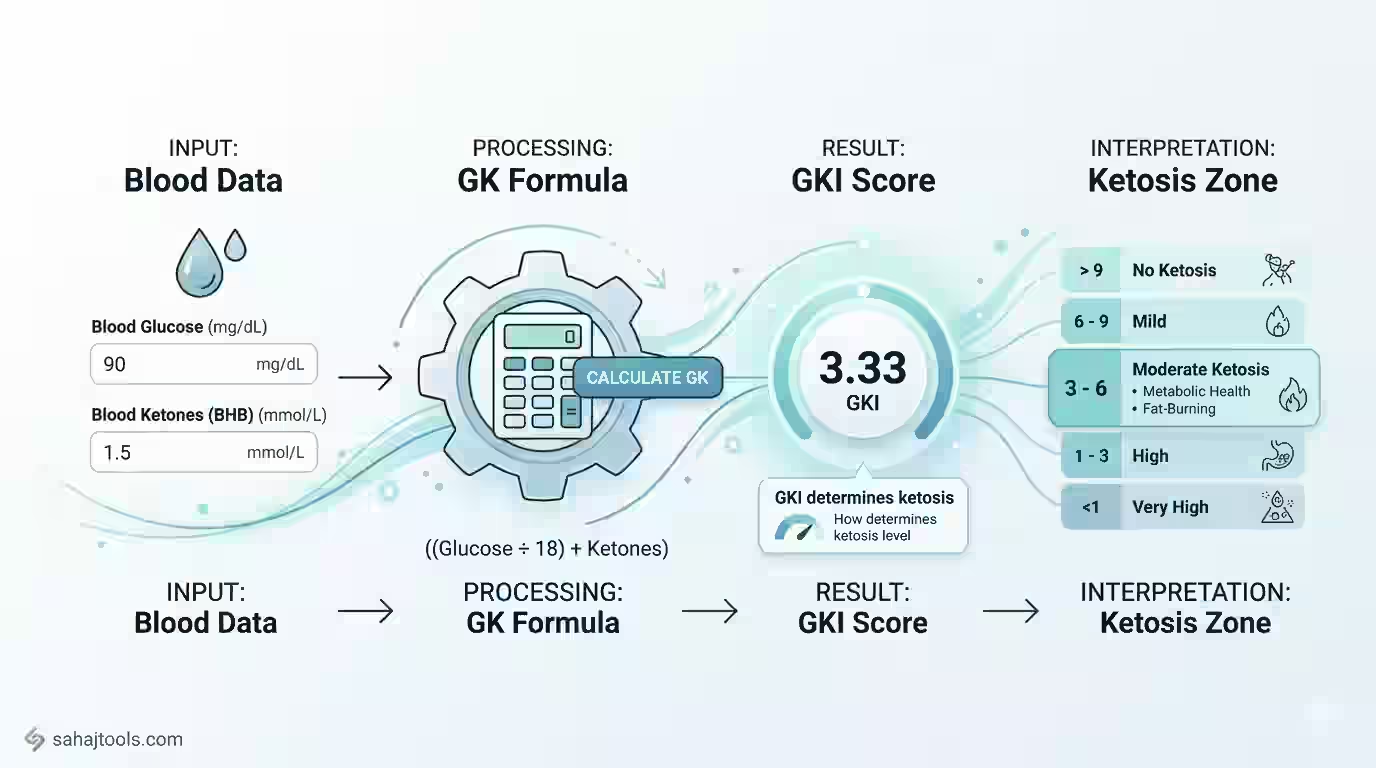
GKI Calculator Formula:
GKI = (Blood Glucose in mmol/L) ÷ (Blood Ketones in mmol/L)
Because blood ketone meters almost always report beta-hydroxybutyrate (BHB) in mmol/L, but blood glucose meters in the US and many other regions report in mg/dL, the calculator first converts glucose to mmol/L before dividing:
Glucose (mmol/L) = Glucose (mg/dL) ÷ 18
The number 18 is the standard glucose conversion factor, derived from the molecular weight of glucose. Once both values share the same unit (mmol/L), the calculator divides glucose by ketones to produce your GKI score. A lower GKI indicates a higher relative level of ketones compared with glucose — in other words, deeper ketosis.
Step-by-Step: How to Use the GKI Calculator
- Select your glucose unit. Choose mg/dL (used in the US and several other countries) or mmol/L (used in the UK, Canada, and most of Europe).
- Enter your blood glucose reading. This should come from a standard blood glucose meter, ideally the same one you use for routine glucose and ketone glucose ratio tracking.
- Enter your blood ketone (BHB) reading in mmol/L. Blood ketone meters, such as Keto-Mojo devices, report BHB in mmol/L by default — this field is always entered in mmol/L regardless of your glucose unit or country.
- Select “Calculate GKI.” The calculator converts your glucose value if needed and divides it by your ketone value to return your GKI score instantly.
- Read your result against the interpretation ranges below to understand what level of ketosis your current readings reflect.
Worked Examples
Example 1 — Nutritional ketosis reading
A person following a ketogenic diet tests their blood glucose and ketones two hours after breakfast. Their blood glucose and ketones calculator shows:
- Blood glucose: 85 mg/dL
- Blood ketones: 1.2 mmol/L
Step 1: Convert glucose — 85 ÷ 18 = 4.72 mmol/L
Step 2: Divide by ketones — 4.72 ÷ 1.2 = GKI of 3.9
A GKI of 3.9 sits within the general nutritional ketosis range, consistent with a well-formulated low-carb or ketogenic diet.
Example 2 — Therapeutic ketosis reading
A person using a medically supervised, higher-fat therapeutic protocol tests using mmol/L units throughout:
- Blood glucose: 4.0 mmol/L
- Blood ketones: 3.0 mmol/L
Step 1: No conversion needed — glucose is already in mmol/L
Step 2: Divide — 4.0 ÷ 3.0 = GKI of 1.3
A GKI of 1.3 falls into the range research has associated with therapeutic ketosis, the deeper metabolic state sometimes targeted under clinical supervision for specific conditions.
Interpreting Your GKI Score (GKI Chart)
GKI Score | Ketosis State | What It Generally Reflects |
9.0+ | Minimal or no ketosis | Glucose-dominant metabolism; typical of a standard, higher-carbohydrate diet |
6.0 – 9.0 | Low-level ketosis | Early adaptation to a low-carb or ketogenic diet |
3.0 – 6.0 | Nutritional ketosis | Consistent with a well-maintained ketogenic diet for general metabolic health or weight management |
1.0 – 3.0 | Therapeutic ketosis | Deeper ketosis typically pursued under medical supervision for specific therapeutic purposes |
Below 1.0 | Deep therapeutic ketosis | Associated with intensive, medically monitored metabolic therapy protocols |
These bands are drawn from the ranges described in the Meidenbauer et al. research and widely referenced in subsequent ketogenic metabolic therapy literature. They are general reference points, not fixed clinical cutoffs — individual context, the reason you’re tracking GKI, and guidance from your care provider should always take priority over a single number.
Clinical & Regulatory Accuracy Notes
The GKI concept and the ranges above are based on published metabolic therapy research, not a universally standardised clinical guideline in the way that, for example, blood pressure categories are. Because GKI is most often used in a therapeutic ketosis context — including for patients following medically supervised ketogenic protocols — anyone using this calculator to guide a treatment decision should verify their result and its interpretation with their treating clinician or dietitian rather than relying on this tool alone. Ketone and glucose meters also vary in accuracy between devices and manufacturers, so consistency (using the same meter, same testing conditions, and same time of day) matters more than any single isolated reading.
What Affects Your GKI Result
- Timing of testing. Glucose and ketones fluctuate throughout the day; testing 2–3 hours after a meal, and at a consistent time each day, gives more comparable results over time.
- Meter accuracy. Blood ketone meters are considerably more accurate than urine ketone strips, which only detect acetoacetate and become less reliable as the body becomes keto-adapted. A blood ketone meter measuring beta-hydroxybutyrate is the recommended standard for GKI tracking.
- Recent food intake. Carbohydrate intake raises blood glucose and, over time, suppresses ketone production, both of which move your GKI upward.
- Hydration and exercise. Dehydration and intense exercise can each temporarily shift glucose or ketone readings independent of your underlying metabolic state.
- Fasting status. Extended fasting typically lowers glucose and raises ketones simultaneously, which is why GKI is also used by people tracking fasting ketosis, not only diet-based ketogenic protocols.
Who Should Use a GKI Calculator
- People on a ketogenic or low-carb diet who want a more complete picture of their metabolic state than tracking glucose or ketones separately.
- Individuals using therapeutic ketosis under medical supervision, where GKI is often used alongside clinical monitoring to track metabolic therapy progress.
- Fasting practitioners who want to see how their glucose ketone index shifts across a fasting window, including in relation to autophagy timeline discussions.
- Anyone comparing readings across different glucose units, since the calculator automatically handles the mg/dL-to-mmol/L conversion.
Frequently Asked Questions
You calculate GKI by dividing your blood glucose level (converted to mmol/L, if necessary) by your blood ketone level in mmol/L. If your glucose is measured in mg/dL, divide it by 18 first to convert it to mmol/L, then divide by your ketone reading. This calculator performs both steps automatically.
There's no single "good" score that applies to everyone — it depends on your goal. A GKI between 3.0 and 6.0 generally reflects nutritional ketosis, suitable for general metabolic health and weight management goals. A GKI between 1.0 and 3.0 reflects therapeutic ketosis, which is typically pursued under medical supervision rather than as a general wellness target.
Your GKI score reflects the balance between glucose and ketones in your blood at the moment you tested. A lower number means your ketone level is relatively high compared with your glucose, indicating deeper ketosis; a higher number means glucose is dominant and ketone production is minimal. Context — your goals, diet, and any medical supervision — determines what your specific number means for you.
Divide your glucose value in mg/dL by 18. For example, a reading of 90 mg/dL converts to 5.0 mmol/L (90 ÷ 18 = 5.0). This conversion factor is derived from the molecular weight of glucose and is the standard method used in clinical and laboratory settings worldwide.
A GKI below 9.0 generally indicates some degree of ketosis, with lower numbers reflecting deeper ketosis. Scores between 3.0 and 6.0 are commonly described as nutritional ketosis, while scores below 3.0, and especially below 1.0, are associated with the deeper therapeutic ketosis ranges referenced in metabolic therapy research.
Nutritional ketosis refers to the moderate ketosis achieved through a standard ketogenic or low-carb diet, typically reflected in a GKI of roughly 3.0 to 6.0. Therapeutic ketosis is a deeper, more tightly controlled state — generally GKI below 3.0 — used under medical supervision for specific clinical purposes, such as certain metabolic therapy protocols.
Yes. GKI is commonly tracked during extended fasting, since fasting typically lowers blood glucose while raising ketone production, driving GKI downward over the course of a fast. Many people use it alongside fasting ketosis and autophagy timeline tracking to see how their metabolic state shifts as a fast progresses.
Because GKI is a ratio, both readings influence the outcome. A drop in blood glucose lowers your GKI (deeper ketosis), and a rise in blood ketones also lowers your GKI, while the reverse — rising glucose or falling ketones — raises your GKI (lighter ketosis or a return to glucose-dominant metabolism). Testing both markers together, rather than either alone, is what makes GKI more informative than tracking glucose or ketones individually.
Sources & Further Reading
This calculator’s formula and interpretation ranges are based on the Glucose Ketone Index methodology described in Meidenbauer et al. (2015), published in Nutrition & Metabolism, and widely referenced in subsequent ketogenic metabolic therapy literature. GKI ranges are general research-based reference points; individuals using ketosis therapeutically should confirm interpretation with their treating clinician, dietitian, or care provider, as protocols and monitoring standards vary by condition and provider.
Important: This GKI Calculator is intended for general informational and self-tracking purposes. It is not a substitute for professional medical advice, diagnosis, or treatment. If you are using ketosis as part of a therapeutic protocol for epilepsy, cancer metabolic therapy, or any other medical condition, always work directly with your physician or care team to interpret your readings and adjust your protocol.
Last Update: July 2026