
Table of Contents
ToggleIVF Due Date Calculator: Your Reliable Pregnancy Timeline Guide
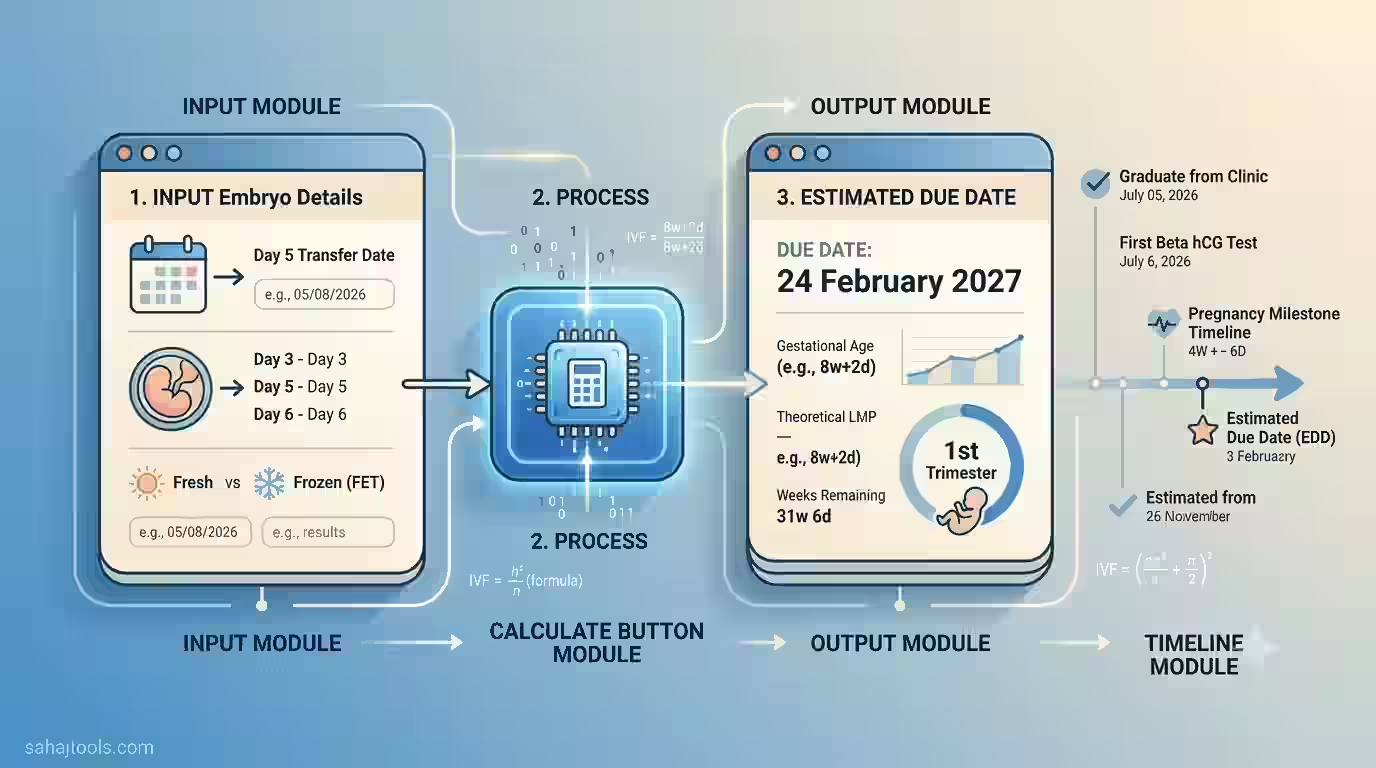
Working out your due date after IVF isn’t the same as a standard pregnancy calculator — it depends on your embryo transfer date and the exact developmental stage of the embryo at transfer, not on guessing when ovulation happened. This IVF due date calculator uses your embryo transfer date, embryo stage (Day 3, Day 5, or Day 6), and transfer type to estimate your due date, current gestational age, and trimester with the same dating logic fertility clinics use. Whether you had a fresh transfer or a frozen embryo transfer (FET), the calculation adjusts automatically for how many days old the embryo was on transfer day.
IVF Due Date CalculatorMedical-Grade Accuracy
ACOG / ASRM FormulaDay 3 · Day 5 · Day 6FET & Fresh
Calculate Your Due Date
Enter your embryo transfer details below
Estimated Due Date
—
—
0%
Gestational Age Today—
Trimester—
Theoretical LMP—
Weeks Remaining—
Twin pregnancy note: The due date above reflects 40-week dating. Twin/multiple pregnancies typically deliver at 36–37 weeks (around —). Your specialist will guide your actual delivery plan.
Your Pregnancy Milestone Timeline
This calculator uses the ACOG/ASRM-validated formula (EDD = Transfer Date + 266 − Embryo Age in days). Results are estimates. Always confirm your due date with your fertility specialist or OB-GYN. First-trimester ultrasound (6–10 weeks) is the gold standard for confirming gestational age.
Reset Calculator?
This will clear all your inputs and results. Your session data will also be erased. This cannot be undone.
How the IVF Due Date Calculator Works
An IVF pregnancy due date calculator works backwards from a known fixed point — the day the embryo was placed in the uterus — rather than from an estimated ovulation date, which makes it more precise than a typical last-menstrual-period-based calculator.
The standard estimate for a full-term pregnancy is 266 days from the date of fertilization (conception), which in IVF is effectively the day of egg retrieval. Because embryos are transferred a set number of days after fertilization, the formula adjusts for embryo age at transfer:
- Day 3 transfer: Due date = Embryo Transfer Date + 263 days
- Day 5 transfer (blastocyst): Due date = Embryo Transfer Date + 261 days
- Day 6 transfer (blastocyst): Due date = Embryo Transfer Date + 260 days
These figures come from subtracting the embryo’s age at transfer (3, 5, or 6 days) from the 266-day count that starts at fertilization. This is the same embryo-age adjustment used across UK fertility clinics and the NHS’s IVF pregnancy dating guidance, and it holds whether the transfer used a fresh embryo or a frozen embryo transfer — fresh versus frozen does not itself change the due date, only the embryo’s age on transfer day does.
How to Use This Calculator
- Enter your embryo transfer date — the date your embryo was placed in the uterus, found on your clinic paperwork.
- Select your embryo development stage — Day 3, Day 5, or Day 6. Ask your clinic if you’re unsure; Day 5 blastocyst transfer is the most common in modern IVF cycles.
- Choose your transfer type — fresh transfer (same cycle as egg retrieval) or frozen embryo transfer (FET, thawed from a previous cycle). This is for your records only and doesn’t change the due date math.
- Select the number of embryos transferred — single embryo transfer (SET) or two embryos (DET), since a twin pregnancy carries a slightly different monitoring path.
- Select “Calculate My Due Date” to instantly see your estimated due date, current gestational age, and trimester.
Worked Example
Suppose an embryo transfer took place on 1 March 2026, using a Day 5 blastocyst, as a frozen embryo transfer, with a single embryo transferred.
- Formula: Transfer Date + 261 days
- 1 March 2026 + 261 days = 16 November 2026
- Estimated due date: 16 November 2026
A second example with a Day 3 transfer on the same date:
- Formula: Transfer Date + 263 days
- 1 March 2026 + 263 days = 18 November 2026
- Estimated due date: 18 November 2026
Notice the Day 3 transfer lands two days later than the Day 5 transfer from the same calendar date — this is because a Day 3 embryo is two days younger, so more days must be added to reach the same 266-day fertilization mark.
Important Medical Disclaimer
This calculator provides an estimate only and is not a substitute for professional clinical judgment. Due dates calculated here should always be confirmed with your fertility clinic or obstetric care provider, who will typically verify dating using an early dating ultrasound scan. Only around 1 in 20 babies are actually born on their estimated due date — this figure is a planning guide, not a prediction. If you have any concerns about your pregnancy, contact your fertility clinic, GP, or maternity unit directly.
Interpreting Your Results
Your results show three figures, each useful in a different way:
- Estimated due date (EDD): The target date your pregnancy reaches full term (40 weeks gestational age). This is the figure your clinic will use for scheduling dating scans and, later, maternity leave planning.
- Gestational age: How many weeks and days “pregnant” you are by the standard obstetric dating convention, which counts from an assumed last menstrual period rather than the actual fertilization date — this is why IVF gestational age can feel slightly ahead of how many days it’s actually been since transfer.
- Trimester: Which of the three broad stages of pregnancy you’re currently in, useful for knowing what antenatal appointments and screening windows apply next.
A dating ultrasound, typically performed between 8 and 14 weeks, remains the clinical gold standard for confirming your due date, since it measures the embryo or foetus directly rather than relying on calendar math alone.
What Affects Your IVF Due Date Calculation
- Embryo age at transfer: The single biggest factor — a Day 3, Day 5, or Day 6 embryo each requires a different number of days added to the transfer date, as shown in the formulas above.
- Fresh vs frozen transfer: Does not change the due date calculation. What matters is the embryo’s developmental age on transfer day, not whether it was fresh or previously frozen.
- Donor egg or donor embryo cycles: The same embryo-age formula applies — the due date is still calculated from the transfer date and embryo stage, not from the donor’s cycle or age.
- Number of embryos transferred: Twin pregnancies (from a two-embryo transfer) are frequently monitored more closely and can arrive earlier than the calculated due date, so your clinic may adjust your care plan accordingly.
- Dating scan findings: If your clinic’s dating ultrasound measurements differ from the calculator estimate, the scan measurement generally takes precedence for your official due date.
Who Should Use This Calculator
- IVF patients who have just had an embryo transfer and want an early estimate of their due date before their first scan.
- Fertility patients using donor eggs or donor embryos who want a due date estimate based on transfer date rather than an unknown biological conception date.
- Partners and support people wanting to understand pregnancy timelines and trimester milestones alongside a patient.
- Patients preparing for maternity leave or clinic scheduling who need an early estimated date to plan around before it’s confirmed by ultrasound.
Frequently Asked Questions
An IVF due date is calculated by adding a set number of days to your embryo transfer date, adjusted for how old the embryo was at transfer. The full count from fertilization to full term is 266 days, so a Day 5 embryo needs 261 more days added, a Day 3 embryo needs 263 more days, and a Day 6 embryo needs 260 more days.
For a Day 3 embryo transfer, the due date formula is Embryo Transfer Date + 263 days. This accounts for the embryo already being 3 days old at the point of transfer, out of the standard 266-day count from fertilization.
For a Day 5 blastocyst transfer, the due date formula is Embryo Transfer Date + 261 days. Day 5 transfer is the most common stage used in modern IVF cycles, as blastocyst-stage embryos tend to have better implantation rates.
The calculation is identical to a fresh transfer — you use the transfer date and the embryo's development stage (Day 3, 5, or 6), not whether it was fresh or frozen. Freezing and thawing don't add to or subtract from the embryo's developmental age used in the formula.
On the day of a Day 5 transfer, you're considered approximately 5 weeks pregnant by standard obstetric dating convention, since that convention counts from an assumed last menstrual period roughly 2 weeks before fertilization. A Day 3 transfer starts at roughly 4 weeks and 3 days by the same convention.
The underlying 266-day rule from fertilization is the same either way. The difference is that IVF gives you a precisely known fertilization date (via egg retrieval and transfer), whereas natural conception due dates are usually estimated from an assumed ovulation date, which is inherently less certain.
Donor egg and donor embryo due dates are calculated exactly the same way — from the recipient's embryo transfer date and the embryo's stage at transfer. The donor's age or cycle timing doesn't factor into the due date formula itself.
This calculator gives a reliable estimate based on established embryology dating conventions, but it should always be confirmed with a clinical dating ultrasound, typically performed between 8–14 weeks. Only a small minority of babies arrive exactly on their calculated due date, so treat this figure as a planning window rather than a fixed prediction.
Sources & Further Reading
Due date dating conventions referenced here follow standard obstetric and embryology practice used across UK fertility clinics and NHS maternity services, including guidance consistent with HFEA (Human Fertilisation and Embryology Authority) and NHS antenatal care standards. Always confirm your personal due date with your fertility clinic or care provider, particularly following your first dating ultrasound.
Last Update: July 2026