
Table of Contents
ToggleHot Tub Chemical Calculator: Get Exact Dosages Fast
Hot Tub Chemical Calculator
Professional water chemistry analysis & dosage guide
✓ In Range! Marginal✗ Out of Range
1
Hot Tub Volume
Enter your tub's water volume in gallons
Typical hot tubs: 200–600 gallons. Check your owner's manual.
2
Current Water Test Results
Enter your test strip or kit readings
Ideal: 7.4 – 7.6
Ideal: 80 – 120 ppm
ppm
Ideal: 150 – 250 ppm
ppm
Ideal: 3 – 5 ppm
ppm
Ideal: 3 – 5 ppm
ppm
Ideal: 0 – 50 ppm
ppm
Ideal: 100 – 104°F
°F
Ideal: < 1500 ppm
ppm
3
Sanitizer Type
What sanitizer system are you using?
Your results will appear here
Fill in your water test readings and tap Calculate to get personalized dosage recommendations and a full LSI water balance analysis.
Langelier Saturation Index
Overall water balance score
——
CorrosiveBalancedScale Forming
Parameter Status
Chemical Dosage Recommendations
Amounts needed to bring your water to ideal levels
Your water chemistry is well-balanced! No chemical adjustments needed right now.
Recommended Treatment Order
Always add chemicals in this sequence for best results
⚠ Safety Reminders
- Always add chemicals to water — never water to chemicals.
- Pre-dissolve granular chemicals in a bucket of warm water before adding to the spa.
- Add one chemical at a time and run jets for 15–20 minutes between additions.
- Re-test water after 1–2 hours of circulation before adding another chemical.
- Store all spa chemicals in a cool, dry place away from sunlight and children.
- Never mix different chemicals — they can react violently.
Reset All Data?
This will clear all your inputs and results. This action cannot be undone.
If your test strip shows low chlorine, high alkalinity, or off-balance pH, a Hot Tub Chemical Calculator tells you exactly how much of each chemical to add based on your tub’s water volume and current readings. Enter your gallons, your test results, and your sanitizer type, and the calculator returns precise dosing amounts — no guesswork, no over-dosing, no chasing numbers all week.
Hot tub water is a small volume that reacts fast. A few ounces too much shock or pH decreaser can throw the whole balance off, which is why a dosage calculator matters more here than it does for a full-size pool.
more water related calculators
How to Use the Calculator
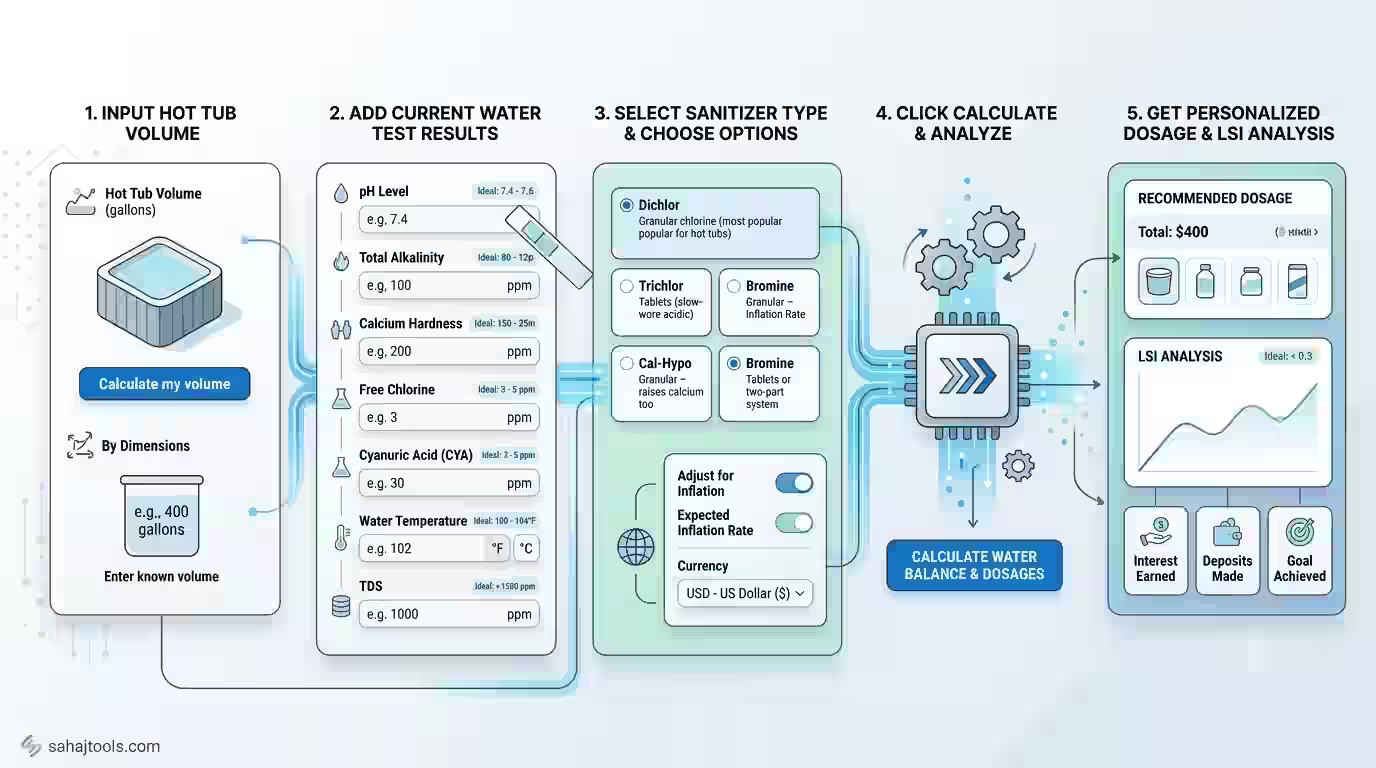
- Enter your hot tub volume in gallons. If you don’t already know it, use the “Calculate my volume” link to work it out from your tub’s dimensions.
- Enter your current water test results — pH, total alkalinity, calcium hardness, free chlorine (or bromine, if that’s your sanitizer), cyanuric acid, water temperature, and total dissolved solids. These come straight off a test strip or liquid test kit.
- Select your sanitizer type — dichlor, trichlor, cal-hypo, or bromine — since dosing math differs by chemical.
- Tap “Calculate Water Balance & Dosages.” The tool compares each reading against the ideal range and returns the exact amount of each chemical to add, plus a full Langelier Saturation Index (LSI) water balance analysis.
Safety Note: Handling Hot Tub Chemicals
Always follow the dosage on your product label. Add chemicals to water, never water to chemicals, and never mix different chemicals together directly. Wear gloves and eye protection when handling concentrated sanitizer or pH adjusters. Test your water before and after dosing, and keep the hot tub cover open with the jets running briefly to circulate chemicals evenly.
Understanding the Target Levels
A hot tub chemical calculator works from a set of accepted target ranges. These are the same ranges most test strip manufacturers print on their bottle:
- pH: 7.2–7.8 (tighter target: 7.4–7.6)
- Total alkalinity (TA): 80–120 ppm
- Calcium hardness (CH): 150–250 ppm
- Free chlorine: 3–5 ppm, or bromine: 3–5 ppm
- Cyanuric acid (CYA): 0–50 ppm (only relevant if using stabilized chlorine)
- Water temperature: 100–104°F
- Total dissolved solids (TDS): under 1,500 ppm
Because hot tubs run hotter and hold a much smaller water volume than pools, their chemical balance shifts faster — bather load, heat, and evaporation all concentrate dissolved solids and throw off pH and alkalinity within days rather than weeks. This is also why the correct order of chemical adjustment matters: alkalinity first, then pH, then sanitizer, then calcium hardness. Adjusting pH before alkalinity is one of the most common reasons people can’t get their hot tub to hold steady.
Bromine and chlorine both sanitize effectively, but they behave differently. Chlorine acts faster and is cheaper, but it produces a stronger odor at high combined-chlorine levels. Bromine holds up better at higher temperatures (a real advantage in a hot tub) and is gentler on sensitive skin, but it costs more per dose and takes slightly longer to activate. Neither is objectively “better” — the right choice depends on budget, skin sensitivity, and how often you’ll be testing.
The Dosing Formula
The core formula behind every hot tub chemical calculator is the same one water treatment professionals use:
Chemical amount needed = (Target ppm − Current ppm) × Volume factor for that chemical × (Hot tub volume in gallons ÷ 100)
Each chemical has its own volume factor because different compounds raise the same ppm by different amounts per gallon. For example, raising free chlorine by 1 ppm in 100 gallons using dichlor granules typically takes about 0.13 oz, while raising total alkalinity by 10 ppm in 100 gallons using sodium bicarbonate takes roughly 0.25 lb (check your product label, since concentrations vary by brand).
Hot Tub Chemical Chart
Parameter | Ideal Range | Too Low Effect | Too High Effect | Adjustment Chemical |
pH | 7.2–7.8 | Corrosion, irritation | Cloudy water, scaling | pH Increaser / Reducer |
Total Alkalinity | 80–120 ppm | pH fluctuations | Cloudy, high pH | Sodium Bicarbonate / Acid |
Free Chlorine | 3–5 ppm | Bacteria growth | Irritation, bleaching | Chlorine Granules/Tablets |
Bromine | 3–5 ppm | Inadequate sanitation | Strong odor, irritation | Bromine Granules/Tablets |
Calcium Hardness | 150–250 ppm | Corrosion of equipment | Scaling on surfaces | Calcium Chloride |
Cyanuric Acid | 30–50 ppm | Chlorine dissipates quickly | Reduced sanitizer effectiveness | Cyanuric Acid |
Use this hot tub chemical chart as a quick reference alongside the calculator for daily checks.
Worked example:
A 400-gallon hot tub tests at pH 7.1, TA 60 ppm, and free chlorine 1 ppm, using dichlor as the sanitizer.
- TA is 60 ppm below the low end of the 80–120 ppm target, so alkalinity increaser goes in first, dosed per the product label for a 20 ppm rise across 400 gallons.
- Once alkalinity is corrected, pH is retested — it often rises on its own as alkalinity increases. If it’s still low, a pH increaser is added next, in small increments, retesting after each dose.
- Finally, free chlorine is raised from 1 ppm to the 3–5 ppm target using dichlor, dosed per the product label for a 400-gallon volume.
This staged approach — alkalinity, then pH, then sanitizer — avoids the common mistake of over-correcting pH only to have it drift again once alkalinity is fixed.
For high bather load (a hot tub party, or several soaks in one day), sanitizer demand rises fast. A rule of thumb many spa owners use is to add roughly half the normal chlorine or bromine dose per person, per hour of heavy use, then retest before the next use.
When to Re-Test and Re-Dose
Test hot tub water before every use, and always retest 15–20 minutes after adding any chemical, with the jets running to circulate it. Because hot tub volumes are small and temperatures are high, chemical demand shifts faster than in a pool — expect to check sanitizer levels at minimum every one to two days, even with a cover on, and immediately after each use with guests.
A full drain-and-refill (typically every 3–4 months, sooner with heavy use) resets everything to zero, so start fresh with a startup chemical routine: fill, test, balance alkalinity and pH, then bring sanitizer up to target before using the tub.
Troubleshooting Common Issues
- Cloudy water is most often caused by low sanitizer combined with high pH, high TDS, or a saturated filter. Check sanitizer first, then confirm the filter has been rinsed or replaced recently.
- Foamy water usually points to a buildup of body oils, lotions, or low-quality chemical residue rather than a ppm imbalance — a foam-reducer product handles the symptom, but a partial drain-and-refill fixes the cause.
- Strong chemical smell or eye irritation is a sign of high combined chlorine (chlorine that’s already reacted with contaminants and stopped sanitizing), not too much chlorine. The fix is a shock treatment to burn off combined chlorine, not less sanitizer.
- Scale buildup or corrosion on tub surfaces and heater elements relates to calcium hardness and LSI balance, not sanitizer at all — recalculate LSI and adjust calcium hardness accordingly.
FAQ – Hot Tub Chemical Calculator
Multiply the difference between your target and current ppm by the chemical's dosing factor, then scale it to your hot tub's volume in 100-gallon increments. The calculator above does this automatically once you enter your volume and test results.
For a 400-gallon tub raising free chlorine or bromine from 1 ppm to the 3–5 ppm target, expect roughly 0.5–0.8 oz of dichlor or an equivalent bromine dose — always confirm against your specific product's label, since concentrations vary.
Ideal pH is 7.4–7.6 (acceptable range 7.2–7.8), total alkalinity is 80–120 ppm, and calcium hardness is 150–250 ppm. Staying within these ranges prevents corrosion, scaling, and sanitizer inefficiency.
Enter your hot tub's volume in gallons, input your current test strip readings for pH, alkalinity, calcium hardness, and sanitizer, select your sanitizer type, then tap calculate to get exact dosing amounts and a full water balance analysis.
Cloudiness usually means sanitizer is too low relative to pH or TDS, while foaming is typically caused by oils and lotions rather than a chemical imbalance — a foam reducer treats the symptom, but a fresh fill treats the cause.
Not directly — hot tubs run at higher temperatures and much smaller volumes, so dosing math and demand rates differ significantly from a pool. Use a calculator built specifically for hot tub or spa volumes for accurate results.
Balancing hot tub water comes down to four numbers — alkalinity, pH, sanitizer, and calcium hardness — adjusted in that order, and rechecked often because small volumes and high heat mean the balance shifts fast. A hot tub chemical calculator removes the guesswork by turning your test strip readings into an exact dose, so you spend less time troubleshooting cloudy or irritating water and more time actually using the tub.
Last Update: July 2026