
Table of Contents
ToggleBlood Alcohol Calculator — Estimate Your BAC Level Fast
Working out how much alcohol is actually in your bloodstream isn’t something most people can do in their head — too many variables move at once. This Blood Alcohol Calculator uses the scientifically established Widmark formula to give you a fast, personalised BAC estimate based on your body weight, biological sex, the drinks you’ve had, how long you’ve been drinking, and whether you’ve eaten. It’s built for anyone who wants a clearer picture of their likely blood alcohol concentration before deciding what to do next — but it is not a substitute for a breathalyser, and it should never be the thing that decides whether you get behind the wheel.
🩸
BAC Calculator
Blood Alcohol Concentration Estimator
⚠️
This calculator is for educational purposes only and provides estimates based on the scientific Widmark Formula. Do not use this to determine if it is safe to drive. Never drive after drinking.
0.00%BAC
—
⏱—Time to Sober
🚗—Safe to Drive
🍺—Total Drinks
⚗️—Pure Alcohol (g)
BAC Effects Scale
⚖️ Legal Limits by Region
🇺🇸USA0.08%
🇬🇧UK/England0.08%
🇪🇺EU (most)0.05%
🇦🇺Australia0.05%
Reset Calculator?
This will clear all inputs, results, and saved session data.
Copied to clipboard!
How the Blood Alcohol Content Calculator Works
This blood alcohol content calculator is built on the Widmark formula, the same scientific model used by toxicologists and forensic researchers for decades to estimate blood alcohol concentration from a known amount of consumed alcohol.
In plain terms, the formula weighs up three things:
- How much alcohol you’ve actually consumed — calculated from the volume and ABV% of each drink.
- How that alcohol distributes through your body — determined by your body weight and a distribution ratio (r) that differs by biological sex, because body water composition differs between men and women.
- How much your body has already eliminated — alcohol leaves the bloodstream at a fairly steady rate over time (the elimination rate, sometimes shown as β), so the longer you’ve been drinking, the more has already been processed.
The simplified version of the equation looks like this:
BAC = (Alcohol consumed in grams ÷ (Body weight in grams × r)) × 100 − (Elimination rate × Hours elapsed)
Where r is roughly 0.68 for men and 0.55 for women, reflecting typical differences in body water percentage, and the elimination rate is generally taken as approximately 0.015% per hour. Food in your stomach doesn’t change the total alcohol absorbed, but it does slow the rate of absorption, which is why the calculator asks about stomach contents — an empty stomach produces a faster, higher peak BAC than the same drinks consumed with a full meal.
How to Use This BAC Estimator: Step-by-Step
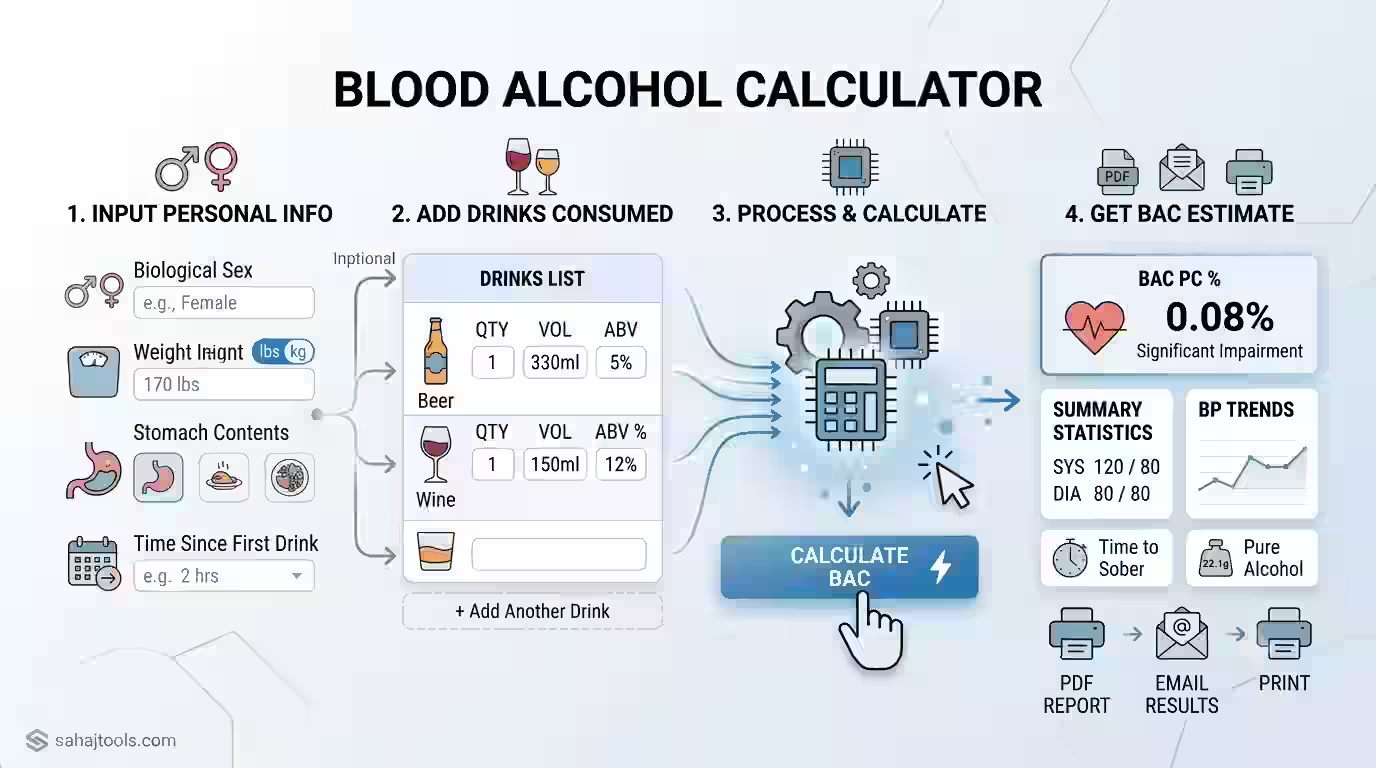
- Select your biological sex — this sets the distribution ratio (r) used in the formula.
- Enter your body weight, choosing kg or lbs.
- Enter the time since your first drink, in hours and minutes.
- Choose your stomach contents — empty stomach, some food, or a full meal.
- Add each drink you’ve consumed, selecting a preset (like Beer 330ml, 5%) or entering custom volume and ABV%.
- Tap “Calculate BAC” to see your estimated blood alcohol concentration instantly.
Worked Examples: BAC by Drinks and Weight
Example 1 — Two beers, average build:
A 170lb man drinks two 12oz beers at 5% ABV over 1 hour, on a stomach with some food. Total alcohol consumed is roughly 26g. Using r = 0.68, his estimated BAC comes out around 0.03–0.04% — below the legal driving limit, but still enough to mildly affect reaction time.
Example 2 — Wine over an evening:
A 145lb woman drinks three 5oz glasses of wine at 12% ABV over 3 hours, on an empty stomach. Total alcohol consumed is around 50g. Using r = 0.55 and accounting for elimination over the 3-hour window, her estimated BAC lands around 0.08–0.09% — at or above the standard legal limit in most US states.
These examples show why identical drink counts can produce very different BAC readings depending on weight, sex, and time elapsed — which is exactly what this calculator accounts for automatically.
Interpreting Your BAC Level
Once you have a number, the real question is what it means in practice:
BAC Level | Typical Effects |
0.01–0.03% | Mild relaxation, slight mood change, little to no impairment |
0.04–0.06% | Lowered inhibition, minor impairment to coordination and judgement |
0.07–0.09% | Noticeable impairment to balance, reaction time, and decision-making |
0.10–0.15% | Significant impairment, slurred speech, poor coordination |
0.16%+ | Severe impairment, risk of blackout, medical concern at higher levels |
This is where an alcohol limit calculator becomes genuinely useful for self-awareness. Still, the ranges above are general physiological guidance, not a legal or medical determination for your specific situation.
Understanding the Legal BAC Limit in the US
The legal BAC limit for driving is set by law, not by physiology, and it varies depending on who’s behind the wheel:
- Standard limit: 0.08% BAC applies to drivers 21 and over in all 50 states, the District of Columbia, and Puerto Rico
- Zero-tolerance limits: drivers under 21 face a much lower limit (often 0.00–0.02%) in nearly every state
- Commercial drivers: a stricter 0.04% BAC limit typically applies for those holding a commercial driver’s license (CDL)
- Utah is a notable exception, with a lower statewide limit of 0.05% BAC
Because these limits differ depending on age, license type, and state, always confirm the current legal limit that applies to you before assuming a result is “under the limit.” This calculator estimates blood alcohol concentration — it does not, and cannot, confirm legal driving fitness.
Disclaimer: Read Before Relying on Your Result
This calculator is for educational and informational purposes only. It provides an estimate based on the Widmark formula, a well-established scientific model, but individual results can vary significantly due to metabolism, medication, liver function, hydration, and other factors the formula cannot fully capture. This tool should never be used to determine whether it is safe or legal to drive. The only reliable way to confirm your BAC is a certified breathalyser or blood test administered by a professional. If there is any doubt at all, do not drive — arrange a rideshare, taxi, or a sober friend instead.
Who Should Use This BAC Calculator
- Anyone planning a night out who wants a general sense of how their planned drinks might affect them before deciding on transport home.
- Event hosts estimating how alcohol consumption might affect guests over the course of an evening.
- People curious about how long to sober up after a specific drinking session, for general planning purposes.
- Health-conscious drinkers who want to understand how weight, sex, and food intake change alcohol’s effect on the body.
How Long Until You're Sober
Your body eliminates alcohol at a fairly constant rate of roughly 0.015% BAC per hour, regardless of coffee, cold showers, or exercise — none of these speed up elimination. If your estimated BAC is 0.08%, it will take roughly 5 to 6 hours to reach 0.00%, assuming no further drinks. This is one of the most searched questions around blood alcohol, and it’s worth repeating: time is the only thing that lowers BAC.
Factors That Affect Your BAC Result
- Body weight and BAC: a higher body weight generally means a lower BAC for the same amount of alcohol, since alcohol distributes through a larger volume of body water.
- BAC by gender: women typically reach a higher BAC than men of the same weight after the same drinks, due to a lower average body water percentage.
- Food in your stomach: eating before or while drinking slows absorption and lowers peak BAC, though it doesn’t reduce the total amount absorbed.
- Time elapsed: BAC by drinks is only half the picture — the same drinks consumed over 4 hours produce a lower peak than the same drinks consumed in 1 hour.
- Drink strength and volume: ABV% and serving size directly determine total grams of alcohol consumed, which is the starting input for the whole calculation.
Frequently Asked Questions
Your BAC after drinking depends on how much alcohol you consumed, your body weight, your biological sex, and how much time has passed. Enter your details into the calculator above for a personalised estimate based on the Widmark formula.
Alcohol leaves your bloodstream at roughly 0.015% per hour. If your estimated BAC is 0.08%, expect it to take approximately 5 to 6 hours to reach zero, with no further drinking in the meantime.
The legal limit is 0.08% BAC for drivers 21 and over in all 50 states, DC, and Puerto Rico, with Utah applying a stricter 0.05% limit. Drivers under 21 face zero-tolerance limits, and commercial drivers face a 0.04% limit in most states.
This varies significantly by body weight, sex, and time elapsed, which is exactly why a single "number of drinks" rule doesn't work reliably. Use the calculator above with your specific details for a more accurate estimate.
A higher body weight typically results in a lower BAC for the same amount of alcohol, because alcohol distributes across a larger volume of body water. This is one of the core inputs the Widmark formula uses.
Biological sex affects the distribution ratio used in the BAC formula, because men and women typically have different average body water percentages. This means women often reach a higher BAC than men of the same weight after identical drinks.
The Widmark formula is a scientific equation used to estimate blood alcohol concentration from the amount of alcohol consumed, body weight, biological sex, and time elapsed since drinking began. It has been used in toxicology and forensic science for decades.
Noticeable impairment to coordination and reaction time typically begins around 0.04–0.06% BAC for most people, though sensitivity varies by individual. Impairment increases progressively as BAC rises.
In the US, a standard drink is typically defined as containing around 14g of pure alcohol, though this calculator instead uses the exact volume and ABV% you enter for a more precise estimate.
Sources & Further Reading
This calculator’s methodology is based on the Widmark equation, the standard model referenced in forensic toxicology literature. For current US legal drink-drive limits, consult the National Highway Traffic Safety Administration (NHTSA) or your state’s Department of Motor Vehicles, as limits and enforcement details can vary by state and are updated periodically.
Last Update: July 2026