
Table of Contents
ToggleCab Meter Calculator: Estimate Your Taxi Fare Before You Ride
Ever hopped into a taxi only to be surprised by the final bill? Whether you’re a daily commuter, a tourist exploring a new city, or a business traveler tracking expenses, unpredictable cab fares can be frustrating. Our Cab Meter Calculator helps you estimate taxi costs upfront—so you know exactly what to expect. This free cab meter estimator uses real-world pricing structures to break down your fare, including distance, waiting time, and extra charges. Skip the guesswork and use the calculator below to plan your next ride with confidence.
🚖
Cab Meter Calculator
Accurate taxi fare estimation worldwide
📍
Trip Details
min
pax
$
⚙️
Fare Settings
$
$
$
$
💡
Surcharges
Peak Hour ChargeRush hour surcharge
%
Night FareLate-night / early-morning
%
Traffic DelayHeavy congestion charge
min
🚕
Fill in the trip details and click Calculate Fare to see your fare breakdown.
Estimated Total Fare
$0.00
0 km · 0 min wait
📊
Fare Breakdown
🗒️
Trip Summary
🔄
Reset Calculator?
All inputs and results will be cleared. This cannot be undone.
✅ Copied to clipboard!
Whether you’re checking a quote from a driver, comparing a cab against a rideshare app, or budgeting for a trip in an unfamiliar city, this taxi fare estimator gives you a transparent number to work from — before the meter starts ticking.
related automotive & transport calculators
How the Cab Meter Calculator Works
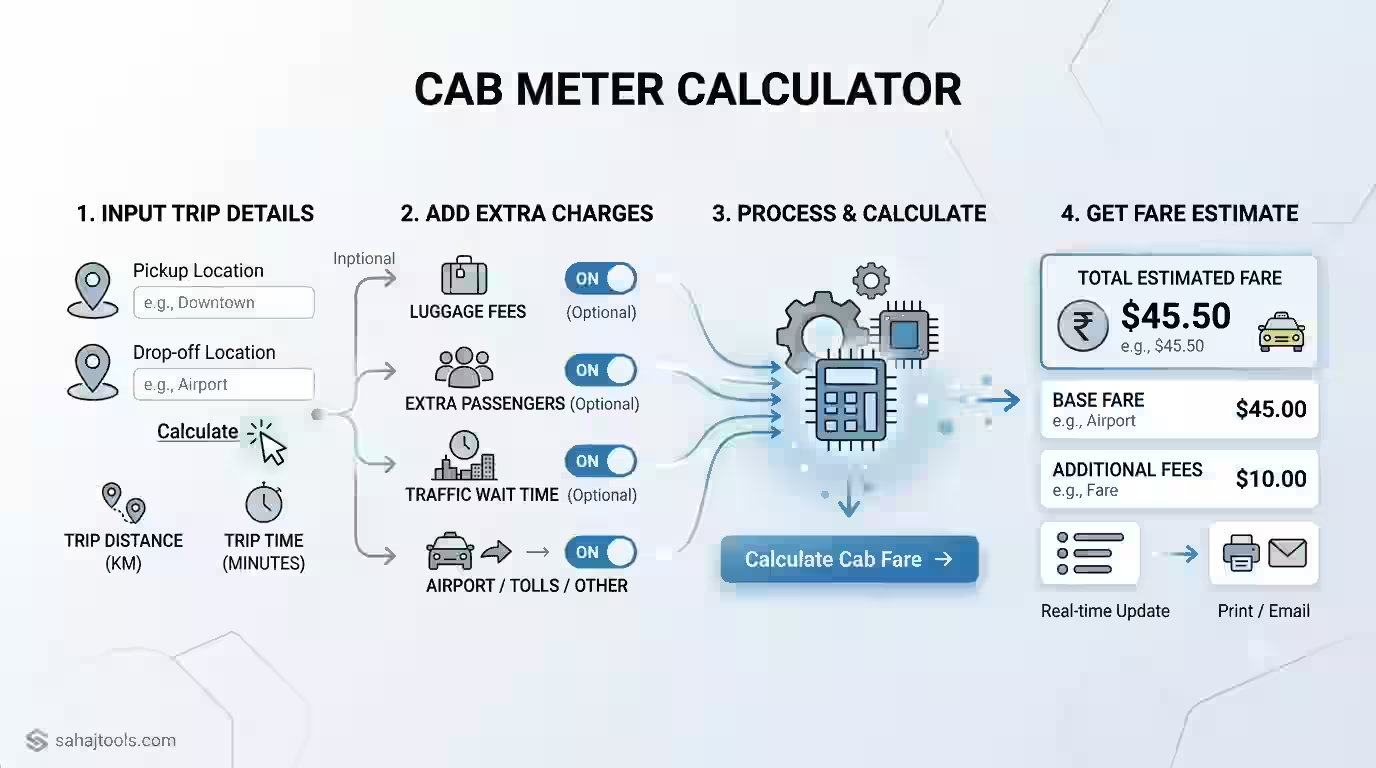
Every taxi fare, everywhere in the world, is built from the same core components — a digital taximeter or smart taximeter just automates the math while the ride is happening. This calculator lets you do the same math in advance:
- Base fare (flag-fall) — a fixed starting charge the moment you get in, before the vehicle moves.
- Per-kilometer (or per-mile) taxi rate — the distance-based charge, added continuously as the trip progresses. Some regions price fares per mile, others per kilometer, so the tool lets you toggle units to match.
- Waiting/stop time charges — a per-minute rate applied whenever the vehicle is stationary or moving below a set speed, common in heavy traffic or at red lights.
- Extra passenger fees — many tariffs (and most regulatory fare cards) add a small per-passenger surcharge beyond the driver and one rider.
- Tolls and road fees — bridge, tunnel, or highway tolls passed directly to the passenger, added on top of the metered fare.
- Surcharges — optional add-ons such as a night surcharge (also called a midnight fare), a peak-hour surcharge for rush-hour trips, or a traffic-delay charge for unusually heavy congestion.
You enter your trip distance, waiting time, passenger count, and any known toll, then set the fare rates that apply in your city (or use the defaults as a starting estimate). The calculator instantly returns a full fare breakdown.
The Fare Formula: How Each Charge Adds Up
The underlying formula behind almost every taxi fare — and every GPS taxi meter calculator — follows this structure:
Total Fare = Base Fare + (Distance × Per-KM Rate) + (Wait Minutes × Per-Wait-Min Rate) + (Extra Passengers × Per-Pax Rate) + Tolls/Fees + Applicable Surcharges
Each variable is independent, which is why the calculator lets you adjust them separately rather than typing in one lump sum. If your city uses different flag-fall or per-km pricing than the defaults shown, you can override any field — the tool recalculates immediately.
Worked Example: Calculating a Real Taxi Fare
Here’s a full walkthrough using the calculator’s default US rates, so you can see exactly how the fare breakdown builds:
Trip inputs:
- Trip distance: 12.5 km
- Waiting/stop time: 5 minutes
- Extra passengers: 1 (2 total riders)
- Toll/road fee: $2.00
Fare settings:
- Base fare: $2.50
- Per km: $1.50
- Per wait minute: $0.30
- Per extra passenger: $1.00
Calculation:
Charge | Math | Amount |
Base fare | Flat charge | $2.50 |
Distance charge | 12.5 km × $1.50 | $18.75 |
Waiting charge | 5 min × $0.30 | $1.50 |
Extra passenger charge | 1 pax × $1.00 | $1.00 |
Toll/road fee | Passed through | $2.00 |
Total fare | $25.75 |
If you switch on a surcharge — say a 15% peak hour charge — the calculator applies it to the metered subtotal (fare before tolls) and adds it to the final total, so you can see the exact dollar impact of riding during rush hour versus off-peak.
Comparing Fare Structures: Base Rates by Region Type
Because per-km taxi rates and flag-falls vary enormously by city and country, here’s how typical fare structures compare — useful context whether you’re using this as a taxi fare calculator UK, USA, or Australia trip, or checking rates in a different market entirely:
Region Type | Typical Base Fare | Typical Per-KM Rate | Common Surcharges |
Major US city | $2.50 – $4.00 | $1.50 – $2.75 | Night fare, airport fee |
UK city | £2.60 – £3.20 | £1.00 – £2.00/mile | Peak/unsocial hours tariff |
Australian city | AUD $3.30 – $4.60 | AUD $1.80 – $2.50 | Night/weekend tariff, booking fee |
Major Asian metro | $0.50 – $1.50 | $0.20 – $0.60 | AC surcharge, luggage fee |
These are illustrative ranges, not official rates — always check your local RTO (Regional Transport Office), MMRTA, or municipal taxi authority for the tariff card that legally applies in your city, since official fare structures are set and periodically revised by regulators, not by drivers.
Factors That Change Your Taxi Fare
Several variables can shift your final fare beyond the basic distance-and-time math:
- Time of day — a night surcharge or peak hour surcharge can add 10–25% to the metered fare in many cities.
- Traffic conditions — a traffic delay charge or extended waiting time charge kicks in when the cab is stuck in heavy congestion, since drivers are compensated for time, not just distance.
- Vehicle type — AC cab charges (air-conditioned taxi fare) are often higher than non-AC or shared options in markets where both exist.
- Luggage or baggage fees — some tariffs add a small flat fee per large bag.
- Passenger count — extra passenger fees apply once you exceed the standard rider allowance.
- Tolls and fixed fees — airport pickup fees, bridge tolls, or congestion-zone charges are passed through directly and aren’t part of the per-km rate.
Tips to Get a Fair Fare
- Check the official tariff card for your city before you ride, so you know what a legitimate quote should look like.
- Run a quick cab fare comparison between the metered taxi estimate and a rideshare fare calculator for the same trip — surge pricing can sometimes make one option meaningfully cheaper than the other.
- Ask if surcharges apply before the trip starts, especially for night rides or during rush hour, so there are no surprises on the final total.
- Confirm toll and airport fees upfront — these are legitimate add-ons but should be disclosed, not hidden inside a rounded-up total.
- Use this taxi fare estimator online as a sanity check whenever a quoted price feels unusually high for the distance traveled.
other automotive & transport calculators
Frequently Asked Questions
It adds together a base fare, a per-kilometer (or per-mile) charge based on trip distance, a per-minute charge for waiting time, any extra-passenger or toll fees, and applicable surcharges, then returns the total as an itemized breakdown.
Multiply your trip distance by the per-km rate, multiply your waiting minutes by the per-wait-minute rate, then add both to the base fare plus any tolls or surcharges. The calculator automates this so you don't have to do it by hand.
Compare the quoted or metered total against your city's official tariff card (from your local RTO or transport authority), or run the same trip distance and wait time through this calculator using your city's actual base fare and per-km rate.
Enter your trip distance, expected waiting time, number of extra passengers, and any known tolls, then set the base fare and per-unit rates for your city (or use the provided defaults), and select your currency before calculating.
Most meters switch from a distance-based rate to a time-based rate once the vehicle drops below a certain speed or comes to a stop, charging a fixed amount per minute of waiting instead of per kilometer traveled.
A night surcharge (sometimes called a midnight fare) is an added percentage or flat fee applied to trips during late-night or early-morning hours, reflecting higher operating costs and lower demand for drivers during that window.
Cities typically publish a fixed base fare and a per-kilometer or per-mile rate in their official tariff; multiplying the distance by that rate and adding the base fare gives the core metered charge before surcharges or tolls.
A hardware taxi meter is a physical, regulator-certified device installed in the vehicle that calculates fare in real time using GPS or wheel-rotation sensors, while an app-based or GPS taxi meter calculator uses a smartphone's GPS and a pre-programmed rate table to estimate the same fare, often with more flexibility for custom rates but without formal regulatory certification.
Disclaimer: This cab meter calculator provides a fare estimate only. Actual taxi fares vary by region, local tariff regulations, time of day, traffic conditions, and individual driver or operator pricing. Always verify the current, legally applicable tariff with your local transport authority (such as your city’s RTO or MMRTA) or confirm the fare directly with your driver or dispatch service before your trip, and treat the figures here as a planning estimate rather than a guaranteed price.
Last Update: July 2026