
Table of Contents
ToggleTacoma Tire Calculator
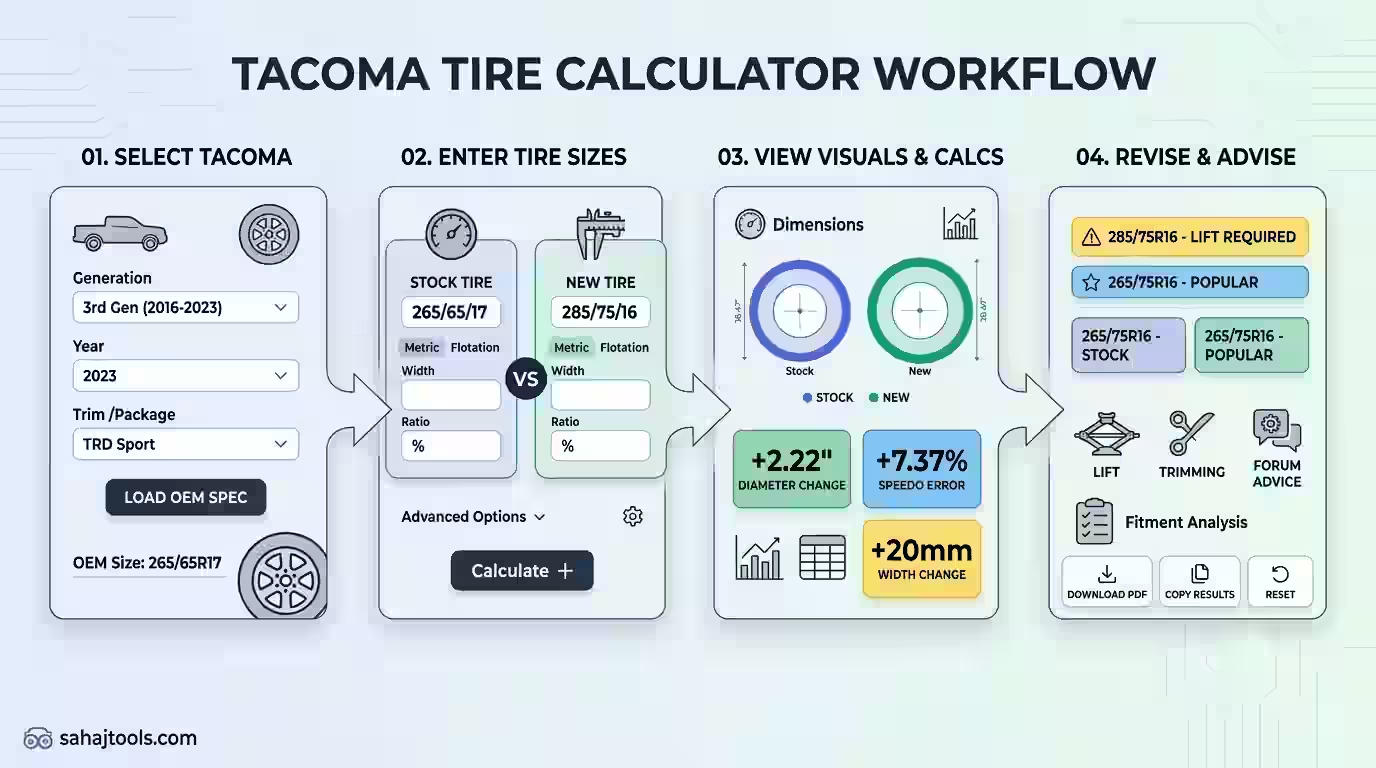
Swapping tire sizes on a Toyota Tacoma changes more than just the way your truck looks — it shifts your speedometer reading, your effective gearing, and how much clearance you have against the fenders and suspension. The Tacoma tire calculator below compares your stock tire against a new size side by side, showing the exact difference in diameter, circumference, and corrected speed, so you know before you buy whether a tire will fit and how it’ll affect your drive.
TacomaTire Calculator
Precision fitment analysis for every generation
01
Select Your Tacoma
Choose your generation and year to load OEM tire specs
▾
▾
▾
OEM Tire Size—
OEM Diameter—
Wheel Size—
Load Range—
02
Enter Tire Sizes
Enter sizes in metric (e.g. 265/70R16) or Flotation (e.g. 31x10.5R15)
STOCKCurrent / OEM Tire
/R
×R
Formatted:—
VS
NEWUpgrade / Comparison Tire
/R
×R
Formatted:—
Advanced Options▾
0 = stock, enter your lift amount
Positive = hub-centric, Negative = deep dish
Offset change affects wheel poke & clearance
Enter a speed to see corrected actual speed
03
Visual Comparison
Side-by-side tire profile rendering
Stock New
04
Calculation Results
Complete tire size analysis
Detailed Comparison
| Specification | Stock Tire | New Tire | Difference |
|---|
Speedometer Analysis
Wheel Offset Analysis
05
Fitment Analysis
Tacoma-specific clearance and fitment prediction
Recommended Sizes for Your Tacoma
Reset Calculator?
This will clear all inputs, results, and saved session data. This action cannot be undone.
Copied to clipboard!
related automotive & transport calculators
How to Use This Calculator
- Select your Tacoma’s generation, year, and trim to load the correct OEM tire specs for comparison.
- Enter your stock tire size in either metric format (e.g., 265/70R16) or flotation format (e.g., 31×10.5R15).
- Enter the new tire size you’re considering, using the same format toggle.
- Add advanced options if they apply: lift height, stock wheel offset, and new wheel offset.
- Enter your current speedometer reading to see your corrected actual speed at that indicated speed.
- Tap Calculate to see diameter, circumference, speedometer difference, and fitment notes.
How It Works: The Tire Size Formula
A tire’s overall diameter is calculated from its three-number size code. For a metric size like 265/70R16, the formula is:
Diameter (in) = (Width in mm × Sidewall Ratio ÷ 100 × 2 ÷ 25.4) + Rim Diameter (in)
Using your stock Tacoma tire, 265/70R16, as an example: the sidewall height is 265 × 0.70 = 185.5mm, doubled for both sidewalls to 371mm, converted to inches (14.6″), then added to the 16″ rim — giving an overall diameter of about 30.6 inches. Compare that to a 285/75R16, a common Tacoma upgrade size: sidewall height is 285 × 0.75 = 213.75mm, doubled and converted to 16.8″, plus the 16″ rim, for a diameter near 32.8 inches — roughly 2.2 inches taller, which is why it’s often grouped with other “33-inch” class off-road tires once rounded.
What the Result Means
Once you know the new tire’s diameter, the calculator converts that into two practical numbers: speedometer error and revolutions per mile.
Because your speedometer is calibrated to the stock tire’s circumference, a larger tire covers more ground per wheel rotation than the speedometer accounts for — so your truck is actually going faster than the display shows. A tire roughly 7% larger in diameter than stock will typically read about 7% slow; at an indicated 60 mph, your Tacoma tire size calculator result would show an actual speed closer to 64 mph. This matters for cruise control accuracy, radar-detected speeding tickets, and odometer-based maintenance intervals.
Worked Examples
Example 1 — Stock to 33s, no lift. A 3rd Gen Tacoma TRD Off-Road running stock 265/70R17 (31.6″ diameter) upgraded to a 285/75R17 (33.3″ diameter, a common “33-inch” fitment) will typically need a mild leveling kit or spacer to clear the front fenders without rubbing, even before adding backspacing changes.
Example 2 — Lifted to 35s. A Tacoma with a 3-inch lift running 35×12.5R17 tires (35″ diameter, up from a 30.6″ stock diameter) will see an indicated 60 mph read as roughly 66-67 mph actual — a large enough gap that many owners recalibrate their ECU or use a speedometer correction gear to keep factory-accurate readings.
Example 3 — Speedometer-only check. If you’ve already swapped tires and just want to know your actual speed, entering your current indicated 60 mph alongside your stock and new tire sizes gives a direct corrected-speed output without needing to calculate lift or offset separately.
Lift Kit and Wheel Offset Considerations
Tire diameter is only half of Tacoma fitment. Wheel offset — the distance between the wheel’s hub-mounting surface and its centerline — determines how far the tire sits in or out of the fender well, using the SAE convention where a lower (or negative) offset pushes the wheel further outward. Reducing offset (going to a “deeper dish” wheel) increases how far the tire pokes out, which can clear frame components but increase the risk of fender rubbing at full turn or full compression. A lift or leveling kit adds vertical clearance for taller tires but doesn’t change horizontal offset clearance — the two adjustments solve different fitment problems, and going up in tire size without addressing both can result in rubbing during hard cornering or suspension articulation, even on tires that seem to “fit” when stationary.
Factors That Affect the Result
- Generation and trim — 1st, 2nd, and 3rd Gen Tacomas have different stock fender clearances and factory wheel offsets.
- Suspension travel — lifted trucks with more compression travel need proportionally more tire clearance than stated lift height alone suggests.
- Wheel width — a wider wheel with the same offset effectively pushes the tire outward more than a narrower one.
- Tire brand and load range — actual measured diameter can vary by up to half an inch between manufacturers for the same nominal size.
- Bolt pattern and hub compatibility — Tacoma wheels use a 6×139.7mm bolt pattern; aftermarket wheels must match this regardless of offset changes.
Fitment Caution
Tire size and offset changes are safety-adjacent modifications. Always cross-check your calculated fitment against real-world builds for your specific Tacoma generation and trim before purchasing tires, and confirm rubbing clearance with a test fit at full steering lock and full suspension compression — calculated diameter and offset numbers are a strong starting point, not a substitute for physical verification. If you’re unsure, consult a suspension shop familiar with Tacoma builds.
Frequently Asked Questions
Most stock 3rd Gen Tacomas can fit up to a 265/70R17 or similar without rubbing; going larger typically requires at least a leveling kit or spacers.
Yes, in most cases — a 285/75R17 or 33x10.5R17 fits many Tacomas with a leveling kit or mild lift, though trimming may be needed on some trims.
Generally yes with a 3-inch or greater lift, wheel spacers or different offset wheels, and sometimes fender trimming, depending on generation and cab configuration.
A leveling kit (1.5–2.5") is usually enough for up to 33s; 35s typically need a 3-inch lift or more for reliable clearance.
Divide your new tire's diameter by your stock tire's diameter, then multiply your indicated speed by that ratio to get your corrected actual speed.
Stock Tacoma offset is typically around +30mm; many lifted builds move to 0mm to +20mm offset wheels to clear larger tires without excessive poke.
Stock-height Tacomas generally clear up to a 265/75R16 or 265/70R17 without modification; anything larger usually needs at least a leveling kit.
Wider wheels and lower offset both push the tire outward toward the fender lip, while higher offset and narrower wheels tuck the tire further in.
Ready to Check Your Fitment?
Enter your Tacoma’s generation and tire sizes above to get instant diameter, speedometer, and clearance results tailored to your build.
Last Update: August 2026