
Table of Contents
ToggleWheel Offset Calculator – Free Fitment, Backspacing & Clearance Check
Swapping to a wider wheel or a different offset can transform how a car sits — or turn into a fender-rubbing, control-arm-hitting mess. This wheel offset calculator compares your current wheel specs against a new set, converting offset to backspacing and flagging clearance issues before you spend money on wheels that won’t fit. It’s built for anyone shopping for aftermarket wheels, adding spacers, or trying to figure out wheel offset for a specific build.
Pro Fitment Tool
WheelFitOffset Calculator
Calculate offset, backspacing, poke & inner clearance — compare OEM vs new wheel fitment instantly.
01
Enter Wheel Specs
Current Wheel
Width (mm)
/Aspect (%)
RRim (in)
Backspacing:—
vs
New Wheel
Width (mm)
/Aspect (%)
RRim (in)
Backspacing:—
02
Fitment Results
◈
Cross-Section Visualizer
Current New
◈
Side-by-Side Comparison
⚠️
Reset Calculator?
This will clear all inputs, results, and saved session data. This action cannot be undone.
related automotive & transport calculators
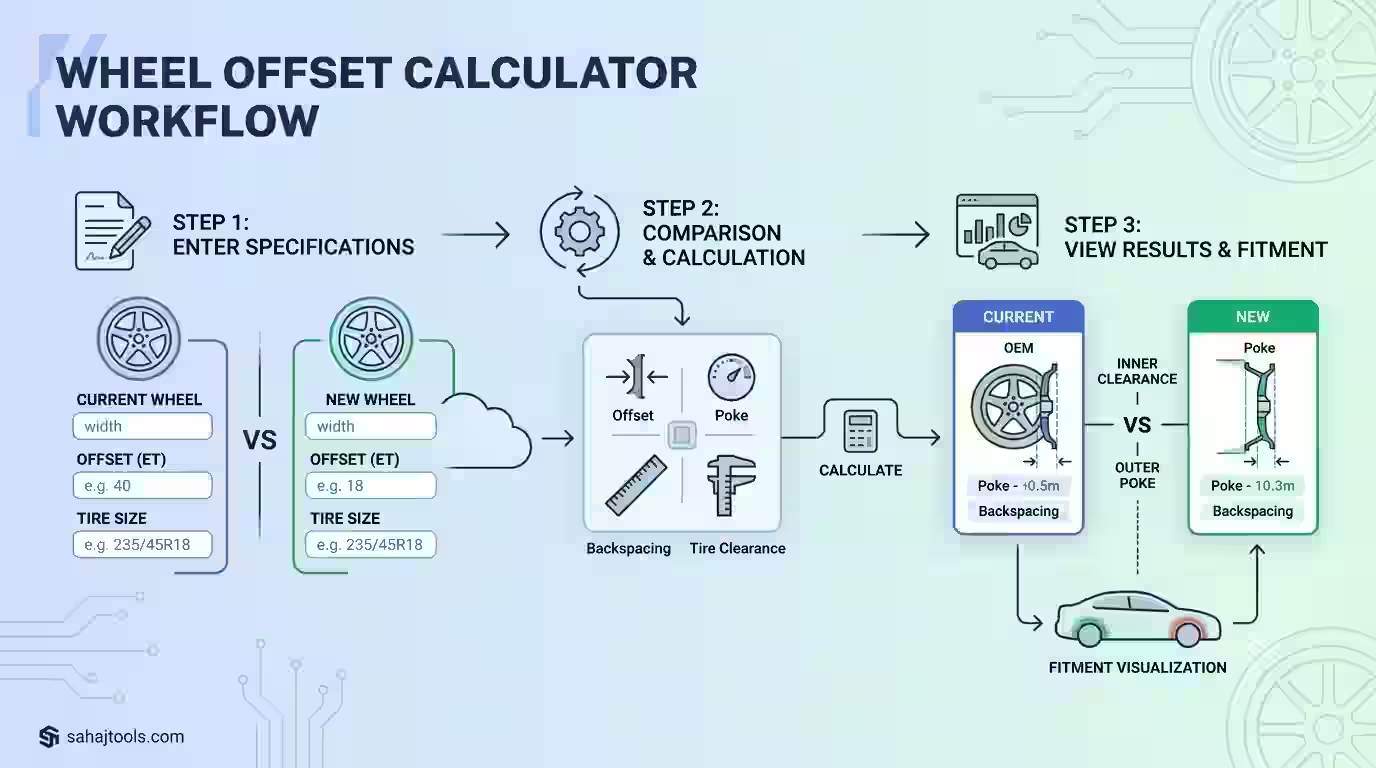
How to Use This Wheel Offset Calculator
- Choose your unit system — metric (mm) or imperial (in).
- Under Current Wheel, enter your existing wheel width, diameter, and offset (ET), plus tire size if you’re checking overall diameter too.
- Under New Wheel, enter the specs for the wheel you’re considering.
- Add a wheel spacer value if you’re planning to run one — this shifts backspacing on either side.
- Tap Calculate Fitment to see the offset difference, backspacing for both wheels, and how far the new wheel moves in or out relative to the old one.
- Compare the poke and inner clearance numbers against your fender lip and suspension components before ordering.
How Wheel Offset Works
Offset (ET) is the distance, in millimeters, between the wheel’s hub mounting surface and its true centerline. A positive offset places the mounting surface toward the outside of the wheel, tucking the wheel inward, toward the suspension. A negative offset places it toward the inside, pushing the wheel outward, toward the fender. Zero offset means the mounting surface sits exactly on the centerline.
The formula behind backspacing conversion is straightforward:
Backspacing (in) = (Wheel Width ÷ 2) + (Offset in mm ÷ 25.4)
Worked example: an 8-inch-wide wheel with a +40mm offset gives backspacing of (8 ÷ 2) + (40 ÷ 25.4) = 4 + 1.57 = 5.57 inches. Swap that same wheel to a +35mm offset and backspacing drops to 5.38 inches — the wheel moves roughly 0.19 inches further out, closer to the fender.
This follows the SAE offset convention used by nearly all North American and European wheel manufacturers, though some brands round differently, so always cross-check a spec sheet number against your own measurement if the wheel is already in hand.
What the Result Means for Your Fitment
A calculated offset shift doesn’t just move a number — it moves the tire. Going from positive to less-positive (or negative) offset pushes the wheel outward, increasing outer clearance risk (rubbing on the fender lip) while opening up inner clearance at the suspension. The reverse — more positive offset — tucks the wheel in, reducing poke but increasing the chance of contact with suspension components, tie rods, or brake calipers.
If your calculated poke exceeds your fender lip by more than roughly 5–10mm, expect visible tire stick-out; if inner clearance drops below the tire’s sidewall bulge at full steering lock, expect rubbing under compression or turn.
Offset vs. Backspacing
Offset and backspacing describe the same physical relationship from different reference points, which trips up a lot of first-time buyers.
Measurement | Reference Point | Direction of Increase | Common Use |
Offset (ET) | Wheel centerline | Higher = wheel tucks in | Manufacturer spec sheets |
Backspacing | Inner edge of wheel | Higher = wheel tucks in | Older/custom wheel shops, off-road builds |
Both move the wheel the same way relative to the vehicle — they’re just measured from opposite starting points, which is why converting between them (rather than treating them as interchangeable) matters.
Factors That Affect Wheel Fitment
- Wheel width — wider wheels push both the inner and outer lip further from centerline, independent of offset.
- Tire section width — a wider tire adds to overall width beyond what the wheel offset calculator alone accounts for.
- Wheel spacers — a spacer effectively lowers positive offset, pushing the wheel outward by the spacer’s thickness.
- Suspension travel — lowered or off-road-lifted vehicles change how much inner clearance is available at full compression.
- Steering angle — inner clearance that looks fine straight-ahead can still rub at full lock.
- Fender rolling or trimming — physically alters how much poke a vehicle can tolerate beyond stock.
Worked Examples
Example 1 — Mild aftermarket upgrade: Current wheel: 8″ wide, +40mm offset. New wheel: 8.5″ wide, +35mm offset. Backspacing moves from 5.57″ to 5.55″ — nearly identical, but the extra half-inch of width adds poke on the outer edge only. Low risk of rubbing on a stock vehicle.
Example 2 — Aggressive stance build: Current wheel: 8″ wide, +45mm offset. New wheel: 9″ wide, a 60 offset wheel (+20mm). Backspacing drops from 5.77″ to 5.29″ — nearly half an inch further out. This combination commonly requires fender rolling or camber adjustment to avoid rubbing.
Example 3 — Spacer-only change: Same 8″ wheel, +40mm offset, with a 15mm spacer added. Effective offset becomes +25mm, backspacing drops by roughly 0.59″. Useful for narrowing a stance gap without buying new wheels, but check that lug studs still have full thread engagement.
Caution: Confirm Fitment Before You Buy
This tool estimates offset, backspacing, and relative clearance from the numbers you enter — it does not measure your actual fender, suspension travel, or brake caliper clearance. Wheel and tire combinations that calculate as “fitting” can still rub under load, at full steering lock, or over bumps depending on your specific suspension setup. Always cross-check calculated results against your vehicle’s OEM fitment guide or a trusted wheel shop, particularly for offset changes greater than 10-15mm from stock, before finalizing a purchase.
other automotive & transport calculators
Frequently Asked Questions
Offset is measured in millimeters from the wheel's hub mounting surface to its true centerline — a value stamped or listed on the wheel itself, not something you calculate from scratch unless you're measuring a physical wheel with a straightedge and calipers.
Divide wheel width in half, convert offset from millimeters to inches, and add the two: Backspacing = (Width ÷ 2) + (Offset ÷ 25.4).
It depends on your current OEM offset, wheel width, tire size, and how much fender or suspension clearance your vehicle has — there's no single universal number, which is why comparing current vs. new specs is the safest approach.
Not automatically, but a wider wheel with the same offset pushes both the inner and outer edges further out, so it increases rubbing risk unless the offset is adjusted to compensate.
Changes under about 10mm from stock are usually low-risk on unmodified vehicles; larger changes often require spacers, fender work, or suspension adjustments to clear safely.
Offset measures from the wheel's centerline, while backspacing measures from the wheel's inner lip — both describe the same mounting position, just from different reference points.
Width changes both edges of the wheel symmetrically, while offset shifts the whole wheel assembly inward or outward as a unit — the two combine to determine both poke and inner clearance.
Compare your new wheel's inner clearance (from backspacing) against measured distance to your nearest suspension component, ideally checked at full steering lock and at ride height.
Compare your new wheel's poke against your fender lip measurement; if the wheel extends past the fender edge, expect visible stick-out or the need for fender rolling.
"ET" stands for "Einpresstiefe," German for "insertion depth" — it's the industry term stamped on wheels alongside the offset value in millimeters.
Ready to Check Your Fitment?
Enter your current and new wheel specs above to see offset, backspacing, and clearance side by side — and avoid an expensive fitment mistake before you order.
Last Update: July 2026