
Table of Contents
ToggleTowing Calculator: Check Your Safe Towing Capacity and Payload
Towing the wrong way isn’t just a mechanical risk — it’s a safety risk for you and everyone sharing the road. This towing calculator helps you check whether your truck, SUV, or car can safely handle a specific trailer by comparing your vehicle’s actual specs against its manufacturer ratings. Instead of relying on the advertised maximum towing capacity alone, it factors in your GVWR, GCWR, passenger and cargo weight, and trailer tongue weight to show the number that actually matters: what you can safely tow right now, with this load.
TowCalcSafe Towing Calculator
🚛Vehicle Specifications
lbs
lbs
lbs
lbs
lbs
👥Vehicle Load
lbs
lbs
🚌Trailer Information
lbs
lbs
Enter your vehicle and trailer specs, then click Calculate to see your safe towing results.
Safe to Tow
Max Safe Towing Capacity
—
Available Payload
—
Remaining After Tongue Wt.
—
Tongue / Pin Weight
—
Vehicle Weight vs GVWR0 / 0
Combined Weight vs GCWR0 / 0
Trailer vs Tow Capacity0 / 0
⚡ Limiting Factor:—
Full Calculation Breakdown
Results are estimates based on industry-standard formulas. Always verify with your vehicle's owner's manual and consult a professional before towing.
Reset Calculator?
This will clear all your inputs, results, and saved session data. This action cannot be undone.
related automotive & transport calculators
How to Use This Calculator
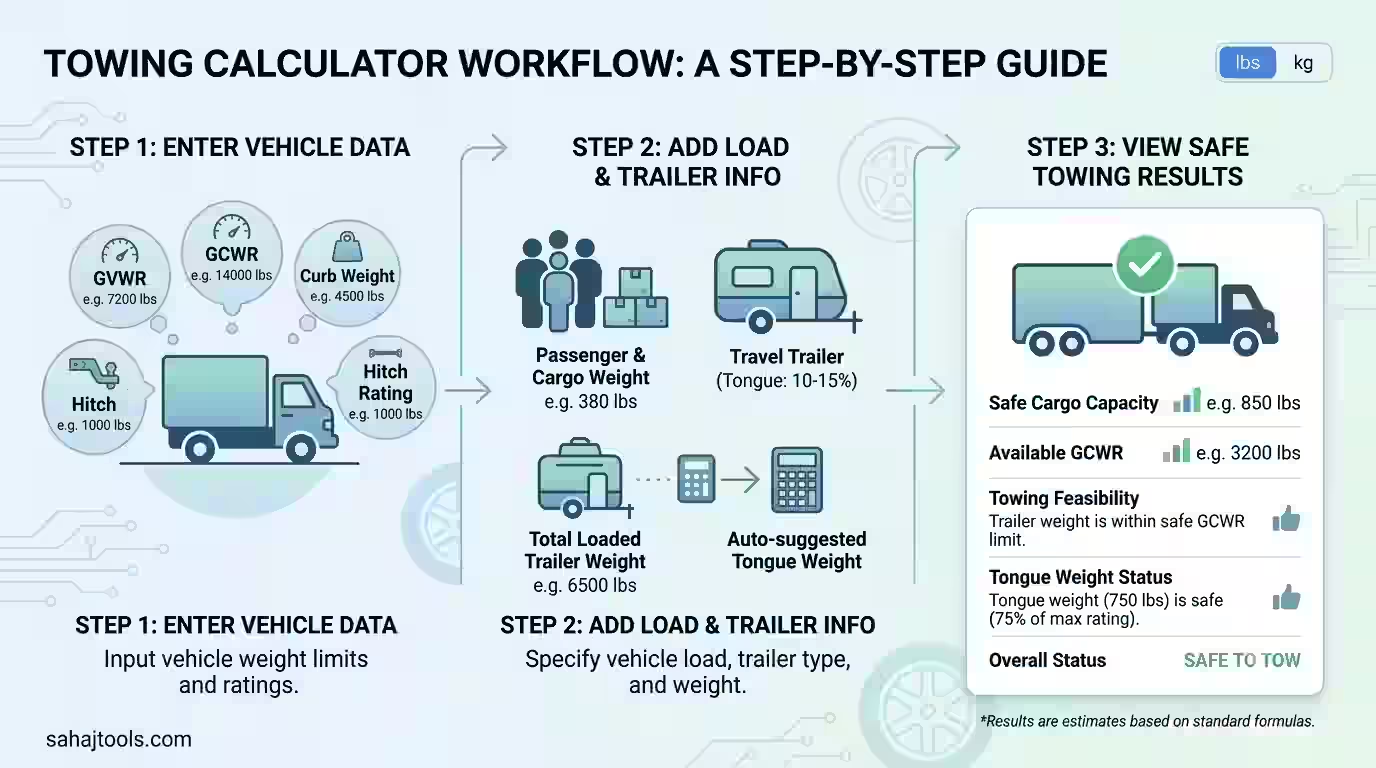
- Enter your vehicle’s GVWR (Gross Vehicle Weight Rating) and curb weight, both found on your door jamb sticker or owner’s manual.
- Enter your GCWR (Gross Combined Weight Rating) and manufacturer tow rating.
- Add your hitch’s maximum tongue weight rating.
- Enter total passenger weight and cargo weight carried inside the vehicle.
- Select your trailer type, then enter the total loaded trailer weight and tongue or pin weight (or let the calculator auto-suggest one based on trailer type).
- Click Calculate to see your safe towing capacity, remaining payload, and whether your setup falls within safe limits.
How It Works: The Towing Capacity Formula
Safe towing capacity isn’t one number — it’s the smallest of several limits working together. The calculator checks your setup against each of these:
Available towing capacity = Manufacturer Tow Rating − (Passenger Weight + Cargo Weight − assumed base occupancy)
Payload used = Curb Weight + Passengers + Cargo + Tongue Weight, which must stay under GVWR
Combined weight check = Vehicle Actual Weight + Total Loaded Trailer Weight, which must stay under GCWR
Worked example: A truck has a GVWR of 7,200 lbs, curb weight of 4,500 lbs, GCWR of 14,000 lbs, and a manufacturer tow rating of 8,500 lbs. The driver adds 380 lbs of passengers and 200 lbs of cargo. That puts the vehicle at 5,080 lbs — still 2,120 lbs under GVWR. A 6,500 lb travel trailer with 780 lbs of tongue weight (12%) brings the vehicle-plus-tongue total to 5,860 lbs (within GVWR) and the full combined weight to 11,580 lbs (within the 14,000 lb GCWR). This trailer is towable — but tongue weight alone used over half the vehicle’s remaining payload, which is the detail most drivers miss.
What the Result Means
If your calculated safe towing capacity is lower than your trailer’s loaded weight, you’re over the limit even if the trailer’s weight alone looks fine against the advertised tow rating. This usually happens for one of two reasons: passengers and cargo have already consumed payload that the tow rating assumed would be free, or the tongue weight is pulling down on the rear axle harder than the GVWR allows. Either condition can affect braking distance, sway control, and hitch stress — not just fuel economy.
Tongue Weight and Trailer Type
Tongue weight (also called pin weight on gooseneck and fifth-wheel trailers) is the downward force the trailer exerts on the hitch, and it should typically fall within 10–15% of the trailer’s total loaded weight for a properly balanced travel trailer, or roughly 15–25% for a car trailer or equipment trailer. Too little tongue weight causes trailer sway; too much can overload the rear axle and hitch receiver rating even if the truck’s total towing capacity has room to spare.
Trailer Type | Typical Tongue/Pin Weight | Common Use |
Travel Trailer | 10–15% of loaded weight | RV / camping trailers |
Car Trailer | 15–20% of loaded weight | Hauling vehicles or equipment |
Gooseneck / 5th Wheel | 15–25% of loaded weight (pin weight) | Heavy equipment, livestock, large RVs |
Factors That Affect Your Towing Capacity
- Passenger and cargo weight inside the vehicle, which eats into payload before the trailer is even attached
- Hitch and receiver class rating, which can cap capacity below the vehicle’s own tow rating
- Trailer brakes, required on most trailers over roughly 3,000 lbs and directly affecting safe stopping distance
- Axle and tire ratings on both vehicle and trailer, which can be a lower limit than GVWR or GCWR
- Elevation, grade, and towing conditions, which reduce effective safe capacity even when the math checks out on paper
Overloaded vs. Safe Towing: A Side-by-Side Look
Consider two SUVs with an identical 8,000 lb tow rating. The first tows a 5,000 lb trailer with two passengers and a full cargo area — its payload use pushes it past GVWR even though the trailer weight is well under the tow rating. The second tows the same 5,000 lb trailer solo, with tongue weight verified at 12% and cargo kept light — every check passes. The trailer weight was identical in both cases; what changed the outcome was payload, not the number printed on the tow rating sticker.
Why Payload Often Limits Towing Before the Advertised Tow Rating Does
Manufacturers calculate maximum tow rating using a lightly loaded vehicle — often just a driver and a full tank of fuel. Add passengers, camping gear, or truck bed cargo, and the payload limit (tied to GVWR) is usually reached well before the advertised towing capacity number ever comes into play. This is the single most common reason real-world towing setups fail a safety check even though the trailer itself falls “under the tow rating.”
How to Find Your Vehicle's Real Ratings
Your GVWR, GCWR, and curb weight are printed on the door jamb sticker on the driver’s side door frame, and confirmed in your owner’s manual. If your vehicle has been modified — larger tires, a suspension lift, or added accessories — get a certified scale weight rather than relying on the factory curb weight, since actual weight can differ meaningfully from the sticker value.
Caution: Verify Before You Tow
This calculator provides an estimate based on standard towing formulas and the values you enter — it is not a substitute for your vehicle manufacturer’s specifications. Towing beyond your vehicle’s rated limits can affect braking, steering control, and structural components, and may void warranty coverage. Always confirm your GVWR, GCWR, and tow rating against your owner’s manual or manufacturer specifications, and consult a qualified mechanic or trailer/hitch professional before towing near your vehicle’s rated limits.
other automotive calculators
Frequently Asked Questions
Subtract your vehicle's curb weight and any passenger/cargo weight from its GCWR, then compare that number to the trailer's loaded weight and your manufacturer's tow rating — the lowest of these figures is your real safe towing capacity.
GVWR is the maximum weight of your vehicle alone, including passengers and cargo. GCWR is the maximum combined weight of your vehicle plus a loaded trailer attached to it.
Tongue weight should generally be 10–15% of the trailer's total loaded weight for travel trailers, and up to 20–25% for car trailers or gooseneck setups — both your vehicle's payload and hitch rating must accommodate it.
Yes, as long as the trailer's loaded weight, tongue weight, and combined vehicle-plus-trailer weight all stay within your vehicle's GVWR, GCWR, and manufacturer tow rating.
Passengers and cargo reduce your available payload, which can push your vehicle over GVWR even when the trailer itself is within the advertised tow rating.
It's the lowest of three numbers: your manufacturer's tow rating, your remaining payload under GVWR, and your remaining capacity under GCWR — not just the largest number on the window sticker.
Check your owner's manual, the manufacturer's towing guide by VIN, or the certification label on the driver's door jamb.
Weigh the empty trailer, then add the actual weight of everything loaded inside it (water, gear, cargo) to get the total loaded trailer weight used in the safe towing calculation.
Tongue weight is the downward force the trailer's hitch coupler exerts on your vehicle's hitch ball, and it factors directly into your vehicle's payload capacity.
Manufacturer tow ratings assume a nearly empty vehicle; once real passengers, cargo, and tongue weight are added, GVWR is frequently reached before the advertised tow rating is.
Ready to check your setup? Enter your vehicle and trailer specs above to see your safe towing capacity in seconds.
Last Update: July 2026