
Table of Contents
ToggleHome Addition Cost Calculator: Estimate Your Project Budget by Size and Scope
🗑️
Reset Calculator?
This will clear all inputs and results. This action cannot be undone.
✅
Free Cost Estimator
Home Addition Cost Calculator
Get an accurate, itemized estimate for your home addition project in seconds — no signup required.
Project Basics
ft²
Typical range: 200–1,500 sq ftPlease enter a valid size (50–10,000 sq ft)Please select an addition type
ft²
Used for context & ROI tipsConstruction Details
🪵 Basic
🏠 Standard
✨ Premium
💎 Luxury
1 story2 stories3 stories
1
Optional Add-ons
Estimated Total Cost
—
Most likely: —
— Low cost/sqft
— Mid cost/sqft
Cost per Sq Ft
—
Est. ROI at Resale
—
Home Value Added
—
Cost Breakdown
Project Timeline
Expert Tips
How much does a home addition cost? Most home additions run $45,000 to $200,000+, or roughly $150 to $450 per square foot, depending on addition type, finish quality, and region. A 400-square-foot family room addition typically lands between $80,000 and $150,000, while a second-story addition can exceed $250,000 once structural and foundation work are factored in.
If you’re weighing a bedroom, bathroom, or full second-story project, a home addition cost calculator gives you a fast, structured starting point before you start collecting contractor bids. Plug in your square footage, addition type, and finish level, and the calculator translates those inputs into a realistic budget range — the same variables a general contractor uses to build a quote, just faster and without the sales pitch.
This guide walks through exactly how that estimate is built, what drives the number up or down, and how to use it as a genuine planning tool rather than a guess.
related construction & material calculator
How the Home Addition Cost Calculator Works
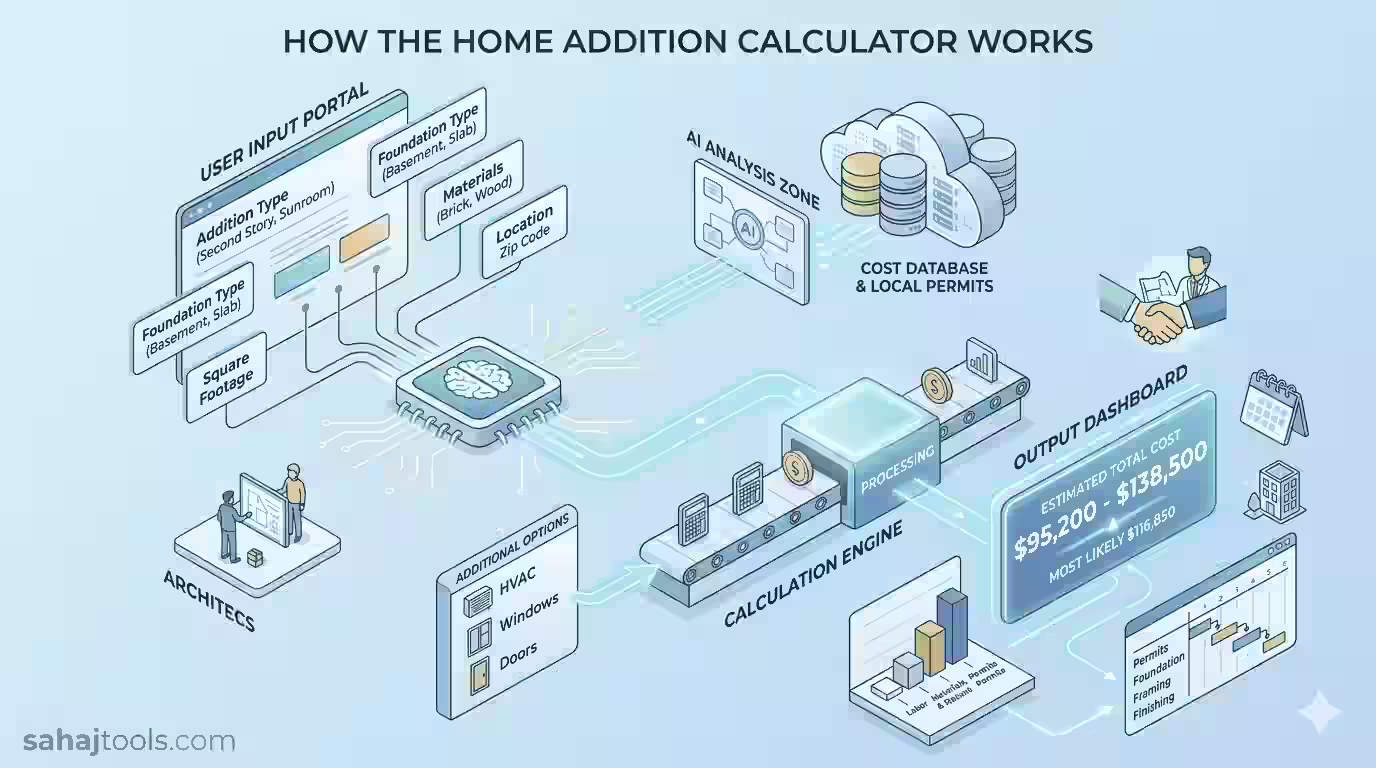
A home addition cost estimator calculator doesn’t pull a single number out of the air — it works from a base cost-per-square-foot figure for your region, then adjusts that figure based on a handful of variables that meaningfully change the price.
The core inputs behind almost any credible estimate are:
- Square footage — the addition’s footprint, since most contractor pricing scales per square foot before adjustments.
- Addition type — a bump-out, bathroom, bedroom, kitchen, sunroom, or full second story each carry different baseline costs because they involve different amounts of structural, foundation, and systems work.
- Finish quality — builder-grade, mid-range, or high-end/luxury finishes shift the per-square-foot number substantially; a luxury kitchen addition can run 40–60% above a basic version of the same footprint.
- Foundation requirements — a slab-on-grade bump-out is far cheaper than an addition requiring a full poured foundation and excavation.
- Systems work — how much new electrical, plumbing, and HVAC capacity the addition needs. A bathroom or kitchen addition needs both plumbing and electrical; a simple family room may need only electrical and HVAC extension.
- Regional labor rates — the same addition can cost 30–50% more in a high-cost metro area than in a lower-cost region, because labor, not materials, usually drives that gap.
The calculator combines these into a base range, then layers on soft costs — architectural plans, structural engineering, permit fees, and design fees — which typically add another 10–20% on top of hard construction costs. A contingency buffer, usually 10–15% of the total, rounds out the estimate to account for the unknowns that surface once walls open up.
Cost Drivers Behind Your Home Addition Estimate
Every home addition cost estimate is built from the same handful of levers. Understanding them helps you read a contractor’s quote — and your calculator result — with a critical eye rather than just accepting a total.
Square footage and addition type
Cost per square foot isn’t uniform across addition types. A simple enclosed porch or bump-out with no plumbing needs might run $120–$180 per square foot, while a bathroom or kitchen addition — which requires new plumbing runs, ventilation, and often upgraded electrical service — commonly runs $300–$450 per square foot.
Foundation and structural work
If the addition ties into an existing foundation or uses a simple slab, costs stay contained. Additions requiring new footings, excavation, or structural engineering to tie into the existing roofline (common with second-story additions) add a meaningful premium, often $20,000–$40,000 before any interior finish work begins.
Labor and materials split
In most home addition budgets, labor represents 40–50% of the total cost, with materials making up the rest. This ratio shifts toward labor as the project involves more skilled trades — electrical, plumbing, and HVAC work is labor-intensive relative to its material cost.
Permit fees and design fees
Permit fees vary widely by county permit office but commonly run $1,000–$3,000 for a residential addition, scaled to project value. Architectural plans, if the addition requires stamped drawings, typically add $2,000–$6,000, and a structural engineer’s review — often required for second-story or load-bearing changes — adds another $1,500–$4,000.
Finish level
Builder-grade finishes (standard drywall, basic fixtures, mid-tier flooring) sit at the low end of any range. Mid-range finishes add roughly 15–25% over builder-grade. Luxury finishes — custom cabinetry, high-end flooring, premium fixtures — can push the finish-related cost up 40% or more over builder-grade for the same square footage.
Worked Example: Estimating a 400 Sq Ft Family Room Addition
Here’s how the numbers come together for a realistic project.
Scenario: A homeowner in a mid-cost-of-living region wants to add a 400-square-foot family room addition with a slab foundation, standard electrical and HVAC extension, and mid-range finishes.
Cost component | Estimated amount |
Base construction (400 sq ft × ~$200/sq ft) | $80,000 |
Foundation (slab, included in base) | — |
Electrical + HVAC extension | $6,000 |
Design fees (basic plans, no engineer needed) | $2,500 |
Permit fees | $1,800 |
Contingency (10%) | $9,000 |
All-in estimated total | ≈ $99,300 |
This lands the project in the $90,000–$105,000 range once soft costs and contingency are folded in — a realistic mid-range outcome for this scope. Change the finish level to luxury, or add a second bathroom to the addition, and the same footprint can push past $130,000.
Home Addition Cost Range by Project Scope
Cost varies significantly by addition type because each type carries a different mix of structural, plumbing, and electrical demands. Use this table as a planning reference, not a quote.
Addition type | Typical size | Low estimate | High estimate |
Bump out addition | 100–200 sq ft | $20,000 | $50,000 |
Enclosed porch / sunroom addition | 200–300 sq ft | $35,000 | $80,000 |
Bedroom addition | 200–400 sq ft | $45,000 | $100,000 |
Family room addition | 300–500 sq ft | $60,000 | $150,000 |
Bathroom addition | 60–120 sq ft | $40,000 | $75,000 |
Kitchen addition | 200–400 sq ft | $80,000 | $180,000 |
Master suite addition | 400–600 sq ft | $100,000 | $220,000 |
In-law suite addition | 500–800 sq ft | $120,000 | $280,000 |
Second story addition | 800–1,500 sq ft | $150,000 | $350,000+ |
These figures represent regional estimates only and will vary considerably by contractor, material choices, and local labor rates.
DIY vs. General Contractor: What Actually Changes the Cost
Some homeowners consider managing parts of a home addition themselves to cut costs. It’s worth being realistic about where that actually saves money and where it introduces risk.
Owner-managed / partial DIY can reduce costs on cosmetic finish work — painting, some flooring, trim carpentry — potentially saving 10–15% of the finish budget. However, structural work, foundation work, electrical, and plumbing almost always require licensed trades and permitted inspections; skipping this isn’t a cost-saving option, it’s a code violation.
Full general contractor management costs more upfront (contractors typically mark up subcontracted labor 15–25% for project management and coordination) but centralizes accountability, scheduling, and code compliance under one licensed party — which matters significantly for anything touching structural elements or a home’s electrical/plumbing systems.
For any addition involving foundation work, load-bearing changes, or a second story, hiring a licensed general contractor isn’t optional in most jurisdictions — it’s required to pass inspection and secure final sign-off from your local building department.
Home Addition Costs: Value-Add and ROI Context
Not all home additions return the same value at resale. According to industry cost-vs-value data published annually by remodeling trade publications, mid-range bathroom additions and family room additions tend to recoup a meaningful share of their cost at resale, while highly customized additions — like an elaborate in-law suite or a niche-use room — often return less proportionally, since buyer demand for that specific layout varies.
If ROI is a factor in your decision, it’s worth discussing with a local real estate agent how comparable additions have performed in recent sales in your specific neighborhood, since this varies more by local market than by national averages.
How to Vet a Contractor for Your Home Addition
Before committing to any bid:
- Get at least three written quotes. Verbal estimates or single-bid decisions are the most common source of budget overruns on additions.
- Confirm licensing and insurance directly with your state or county licensing board — don’t rely solely on a contractor’s own claim.
- Ask for permit handling in writing. A reputable general contractor pulls permits through the county permit office and handles inspections; if a contractor suggests skipping permits, treat that as a red flag, not a cost-saving tip.
- Request a line-item breakdown, not just a lump sum, so you can compare labor, materials, and soft costs across bids.
- Ask who handles structural engineering if your addition involves a second story or load-bearing wall removal — this shouldn’t be an afterthought.
Common Mistakes When Budgeting a Home Addition
- Skipping the contingency buffer. Additions routinely surface unknowns once walls open — outdated wiring, unexpected foundation issues — and a 10–15% contingency isn’t optional padding, it’s standard practice.
- Forgetting soft costs. Design fees, permit fees, and engineering fees are easy to overlook when mentally budgeting only construction costs, but they commonly add 10–20% to the total.
- Comparing bids on total price alone, rather than scope — a lower bid missing permit fees or using lower-grade materials isn’t actually the cheaper option.
- Underestimating systems work. Extending electrical service or adding a full bathroom’s plumbing is often costlier than the square-footage price alone suggests.
Frequently Asked Questions
Most home additions cost between $45,000 and $200,000 or more, depending on size, addition type, and finish level, with an average of roughly $150–$450 per square foot.
Simple additions without plumbing typically run $120–$200 per square foot, while additions requiring plumbing (bathrooms, kitchens) or structural changes (second stories) often run $300–$450+ per square foot.
A complete estimate includes base construction costs (labor and materials), foundation work if needed, electrical/plumbing/HVAC extension, design and architectural fees, permit fees, and a contingency buffer of roughly 10–15%.
Permit fees for a residential addition commonly range from $1,000 to $3,000, scaled to your project's declared value, though this varies by county permit office.
A second story addition typically costs $150,000 to $350,000 or more, since it involves structural engineering, foundation reinforcement, and roofline reconstruction in addition to the new living space itself.
A bathroom addition generally runs $40,000 to $75,000 for a 60–120 square foot space, with plumbing and ventilation work driving most of the per-square-foot premium.
Start with a per-square-foot base estimate for your addition type and region, add 10–20% for soft costs like permits and design fees, then add a 10–15% contingency buffer before finalizing your budget.
The biggest cost drivers are square footage, addition type, foundation requirements, the amount of new electrical/plumbing/HVAC work needed, finish quality, and local labor rates.
A calculator gives a realistic planning range based on typical regional pricing, but it isn't a substitute for actual contractor bids — always confirm your specific number with at least three written quotes.
A home addition cost calculator is the right starting point for budgeting — but the range it gives you is a planning tool, not a fixed price. Costs vary by contractor, material choices, and local labor rates, so before committing to any contractor, get at least three written quotes and confirm permit requirements with your local building department.
If you’re also planning related work, a garage conversion cost calculator or kitchen addition cost calculator can help you scope adjacent projects using the same square-footage-and-finish-level framework.
Try the calculator above with your own square footage and finish level to get a personalized estimate before you start collecting bids.
Last Update: July 2026