
Table of Contents
TogglePaver Base Calculator: Gravel & Sand Depth Estimator
For a typical patio or walkway, plan on 4–6 inches of compacted gravel base plus 1 inch of bedding sand. A driveway needs 6–8 inches of base, and heavy-load surfaces (RVs, trucks) call for 10–12 inches. Multiply your square footage by the compacted depth, add 15–30% for compaction settling and waste, then convert to tons using your base material’s density.
Paver Base CalculatorGravel & Sand Estimator
01
Project Type
02
Project Dimensions
ft
ft
sq ft
03
Base Layer Depths
ℹPatio / Walkway: 4–6 in gravel + 1 in sand recommended.
in
in
Quick set:
%
%
t/yd³
t/yd³
✓ Copied to clipboard
Getting the base layer right is what separates a patio that stays flat for twenty years from one that heaves, sinks, or grows weeds by next spring. A paver base calculator takes your project’s length, width, and target depth and converts them into the exact tons or cubic yards of gravel and sand you need to order — no guesswork, no math on a napkin at the supply yard. Whether you’re building a patio, walkway, driveway, or a heavy-load surface for vehicles, this tool turns your dimensions into a shopping list in seconds.
This is really two calculations layered on top of each other: a compacted gravel base that carries the structural load, and a thin bedding layer of sand that lets each paver settle level. Get either one wrong — too shallow a base, or the wrong sand depth — and you’re looking at uneven pavers, drainage problems, or a redo within a couple of seasons. The calculator handles both layers together so you’re not estimating them separately and guessing at how they interact.
related construction & material calculator
How a Paver Base Calculator Works
Every paver base material calculator runs the same core formula, just applied twice — once for gravel, once for sand:
Volume (cubic feet) = Length × Width × Depth (in feet)
Since gravel and sand are sold by weight or by cubic yard, not cubic feet, the calculator then converts:
- Cubic yards = cubic feet ÷ 27
- Tons = cubic yards × material density (tons per cubic yard)
The two numbers that trip people up most are compaction factor and waste buffer, and this is where a paver base depth calculator earns its keep. Loose gravel compacts down roughly 20–25% once it’s tamped, meaning if you want a finished, compacted depth of 4 inches, you actually need to order and spread more than 4 inches of loose material — otherwise you’ll compact right past your target and end up short. A 20% compaction factor is a reasonable default for crushed stone base; some contractors run closer to 25% for looser aggregates. On top of that, most estimators add a 5–10% waste buffer to cover spillage, uneven sub-grade, and minor over-excavation.
For the sand layer, the math is identical but the depth is much thinner — typically just 1 inch of bedding sand spread evenly over the compacted gravel, screeded flat with a straightedge so every paver sits at the same elevation.
Density matters more than most people expect. Crushed stone base commonly runs about 1.4 tons per cubic yard, while bedding sand runs closer to 1.2–1.25 tons per cubic yard. Because gravel is denser, a project needing 10 tons of gravel might only need 3–4 tons of sand for the same footprint, purely because of the depth difference and the material’s weight per volume.
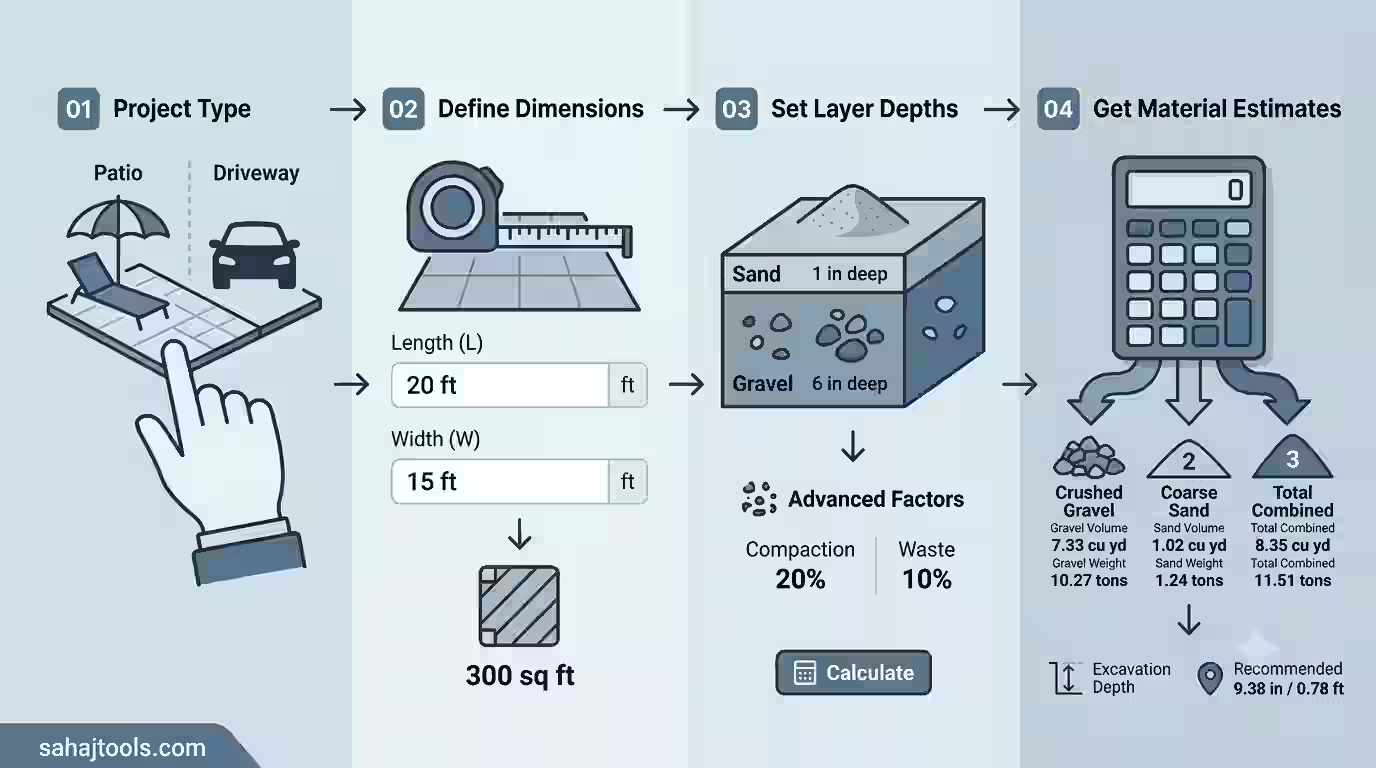
Worked Example: 20×15 ft Patio
Let’s run the numbers for a 300-square-foot patio (20 ft × 15 ft), using a 4-inch compacted gravel base and a 1-inch sand bedding layer — the standard recommendation for a patio or walkway.
Step 1: Convert depth to feet.
4 in ÷ 12 = 0.333 ft (gravel); 1 in ÷ 12 = 0.083 ft (sand)
Step 2: Calculate loose volume needed (cubic feet).
Gravel: 20 × 15 × 0.333 = 100 cu ft
Sand: 20 × 15 × 0.083 = 25 cu ft
Step 3: Apply a 20% compaction factor and 10% waste buffer to gravel (sand typically only needs the waste buffer, since it isn’t compacted the same way).
Gravel adjusted: 100 × 1.30 = 130 cu ft
Sand adjusted: 25 × 1.10 = 27.5 cu ft
Step 4: Convert to cubic yards.
Gravel: 130 ÷ 27 ≈ 4.81 cu yd
Sand: 27.5 ÷ 27 ≈ 1.02 cu yd
Step 5: Convert to tons using density.
Gravel: 4.81 × 1.4 ≈ 6.7 tons
Sand: 1.02 × 1.22 ≈ 1.25 tons
So a 300-square-foot patio at standard depths needs roughly 6.7 tons of crushed stone base and 1.25 tons of bedding sand — figures you’d hand directly to a landscape supply yard when placing an order.
Base Depth Reference Table
Use this table as your starting point before running your own numbers — actual depth requirements can shift based on soil type, climate (frost depth in colder regions), and local code.
Project Type | Gravel Base Depth | Sand Bedding | Typical Use |
Walkway | 4 in | 1 in | Foot traffic only |
Patio | 4–6 in | 1 in | Foot traffic, furniture |
Driveway | 6–8 in | 1 in | Passenger vehicles |
Heavy Load (RV, truck) | 10–12 in | 1 in | Commercial or heavy vehicle traffic |
Regional base material naming varies, which is worth knowing when you’re calling suppliers: what’s labeled crushed stone or road base in one region might be sold as CA6 in Illinois, 21AA in Michigan, or Class 5 in Minnesota. These are all functionally similar dense-graded aggregates suited to paver base — ask your local yard which designation they stock rather than assuming the name is universal.
Material Cost Range
Base material is priced by the ton, and prices vary by region and supplier, so treat these as general planning ranges rather than a quote:
Material | Typical Cost Range (per ton, delivered) |
Crushed stone / gravel base | $30–$60 |
Bedding sand | $25–$45 |
Geotextile fabric (per sq ft, if used) | $0.15–$0.40 |
Polymeric sand (joint sand, per bag) | $25–$45 |
For the 300-square-foot patio example above, total base material would land in roughly the $250–$470 range before labor, delivery fees, or the pavers themselves.
Do I Need Geotextile Fabric?
Geotextile fabric is a permeable landscape barrier laid between the compacted sub-grade and the gravel base. It’s not always required, but it’s cheap insurance against a common long-term failure mode: gravel migrating down into soft soil over time, which causes settling and uneven pavers years after installation. It’s especially worth using on clay-heavy or poorly draining soil, or anywhere drainage slope is a concern. Skipping it on well-draining, stable soil is common practice and generally fine — but if you’ve had drainage issues on the site before, the extra material cost is small relative to redoing a settled patio.
Paver Base vs. Related Calculators
A paver base calculator solves one specific piece of a larger project — the base layer — and it’s worth knowing where it fits alongside other tools:
- A general paver calculator figures out how many individual pavers you need based on their size and your area, separate from the base material underneath.
- A gravel calculator or crushed stone calculator handles bulk aggregate for driveways, drainage beds, or general landscaping, not specifically layered for paver installation.
- If you’re comparing this to a patio base calculator or walkway base calculator, those are often the same tool under a different name — the depth recommendations track closely with project type rather than a fundamentally different formula.
- A driveway base calculator follows the same math but at the deeper 6–8 inch range this article covers for vehicle loads.
- Once your base is in and pavers are laid, a polymeric sand calculator will help you estimate joint sand for locking the pavers in place, and an edging calculator covers the restraint material along the perimeter.
- If budget is the main driver, a paver cost calculator rolls base material, pavers, and labor into one total project estimate.
Common Mistakes to Avoid
- Skipping the compaction factor. Ordering exactly your target compacted depth in loose material means you’ll fall short once it’s tamped down — always add 15–25% before converting to tons.
- Using the same depth everywhere. Base thickness should match load: a walkway doesn’t need driveway-depth base, and using driveway depth everywhere wastes material and budget.
- Ignoring sub-grade prep. No amount of base depth compensates for skipping proper excavation and compaction of the native soil underneath — base aggregate sits on top of, not instead of, a properly prepared sub-grade.
- Forgetting the waste buffer. Spillage, uneven excavation, and minor site variations are normal — a 5–10% buffer on top of your calculated volume avoids a second supply run mid-project.
- Assuming one national depth standard. Frost depth, soil drainage, and local code all shift the right answer regionally — the ranges here are a solid starting point, not a substitute for checking what’s typical in your climate.
Frequently asked questions(FAQ)
It depends on your square footage and project type, but as a general planning figure, expect roughly 0.4–0.5 tons of compacted gravel base per 100 square feet at a 4-inch depth, scaling up proportionally for deeper driveway or heavy-load applications.
Most patios use 4–6 inches of compacted gravel base topped with 1 inch of bedding sand, which is sufficient for foot traffic and outdoor furniture.
Driveways carrying passenger vehicles typically need 6–8 inches of compacted base, since vehicle loads require significantly more structural support than foot traffic.
Multiply your square footage by your target compacted depth in feet, add roughly 20% for compaction, then convert to tons using a density of about 1.4 tons per cubic yard for crushed stone.
A 1-inch bedding sand layer is the standard recommendation across most patio, walkway, and driveway paver projects, spread evenly and screeded flat before laying pavers.
Add 15–25% to your target compacted volume before ordering, since loose gravel settles and densifies once tamped — a 20% compaction factor is a reasonable default for most crushed stone base.
Divide your total loose volume in cubic feet (length × width × depth, plus compaction and waste allowances) by 27 to get cubic yards.
A dense-graded crushed stone — regionally labeled crushed stone, road base, CA6, 21AA, or Class 5 depending on where you live — is the standard choice because it compacts tightly and drains well.
It's not mandatory on stable, well-draining soil, but it's recommended on clay-heavy or poorly draining sites to prevent gravel from migrating into the sub-grade over time.
A 5–10% waste buffer on top of your calculated volume is typical, covering spillage, minor excavation variance, and site irregularities.
This varies widely by paver size and material — typically 2,000–3,500 lbs per pallet — so check with your specific paver supplier rather than assuming a standard figure.
Before you head to the supply yard, pull your project’s length and width and pick the project type that matches your use case. Run those numbers through the calculator with your local base material’s density (ask your supplier if you’re not sure — it’s usually printed on their price sheet), and you’ll walk in with an exact tons figure instead of an estimate. If your site has drainage concerns or sits on clay soil, factor in geotextile fabric before finalizing your total.
Last Update: August 2026